Knit Fabric Manufacturer Since 2009 · China
Knit Fabric Manufacturer Since 2009 · China

Find our technical articles, sourcing guides and industry insights more easily.
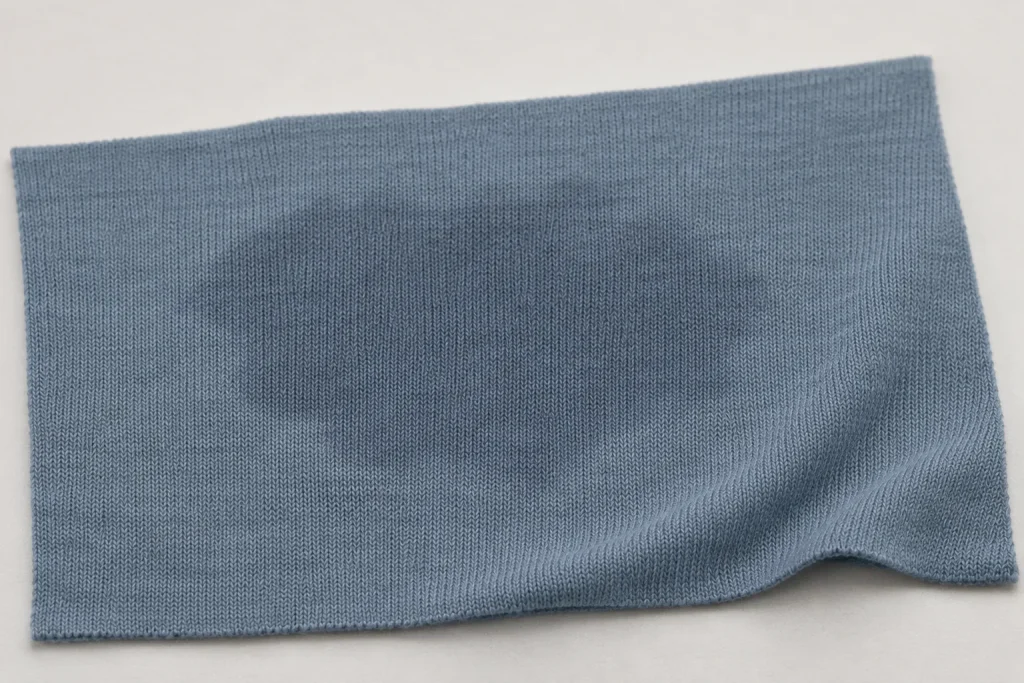
A dark patch spreads across your workout top, even though the label says “quick-dry”. That patch shows where moisture has changed the fabric’s appearance. Its size alone cannot tell you how much water remains against your skin or how quickly the whole fabric is drying.
A spreading patch may accompany useful movement of sweat away from one spot. It may also grow because sweat is arriving faster than it can evaporate. To understand the difference, follow the water from the skin-facing surface, through the knit and into the surrounding air. The appearance outside, the feeling inside and the change over time each reveal a different part of that journey.
Dry fabric contains many interfaces between fibres and air. Water entering those spaces changes how light travels through and reflects from the material. On many dyed fabrics, the wet region looks darker, making its boundary easy to see.
The strength of that contrast also depends on colour, surface texture and lighting. A study of moisture-induced colour change in polyester fabrics found that changing moisture levels affected perceived colour, including lightness. The visible change was an interaction between moisture and the particular fabric’s appearance.
This matters when comparing two tops. A strongly contrasting patch can draw attention to moisture that another colour or texture makes less obvious. Even on the same fabric, the outline shows the extent of a visible change; it does not map the water distribution through the fabric’s thickness.
Inside a garment, you experience the fabric touching and moving against your skin. Water content, contact, friction and heat transfer all contribute to that sensation. A fabric that clings while damp can feel uncomfortable even when its outside patch looks modest.
In a controlled study involving 20 assessors, researchers varied knitted fabric type, water content and friction speed. These factors affected wetness perception during dynamic skin contact. The experiment helps explain why a photograph captures only part of what a wearer experiences.
An outside surface can therefore show sweat while the skin-facing surface carries less liquid. Both faces can also remain wet. Following the movement between them is the next step in understanding the patch.
Liquid sweat first has to wet the surface it encounters. It can then move along spaces within yarns and between fibres, spread across the fabric, or travel through its thickness. These movements depend on the combination of surface wettability and the available pathways.
Fibre moisture uptake is a separate property. Cotton absorbs moisture within the fibre more readily than polyester, but liquid can also occupy spaces around fibres in either fabric. Polyester’s low moisture uptake therefore does not mean that a polyester knit cannot become wet. Equally, cotton’s absorbency does not describe how readily a finished cotton surface first wets or how quickly the complete knit will dry.
Fibre choice, knit structure and finishing shape these pathways. Shaped fibres can introduce surface channels; hydrophilic finishing can change wetting; and different yarns or treatments on the two faces can favour movement towards one side. Their effectiveness depends on how they work together in the finished fabric.
Consider a patch widening across a top. Water is reaching a larger visible area, but that movement could be mostly sideways. To establish whether the skin-facing surface is becoming drier, you also need to know how water is distributed between the faces and how that distribution changes over time.
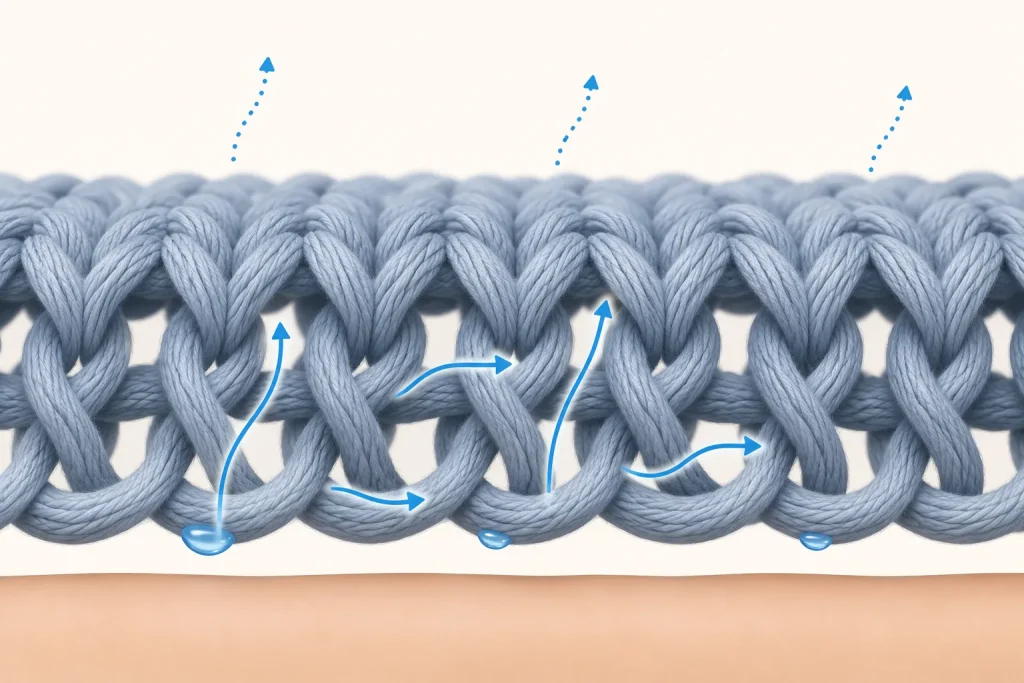
Distributing water over a larger exposed surface can help it evaporate. The surrounding air still has to accept that moisture. Humidity, airflow and temperature affect the process, as does whether the wet surface is covered by another layer.
Imagine the same top during two sessions. Outdoors, moving air may carry moisture away from the exposed fabric. In a humid room with little air movement, water may accumulate even as it spreads. The changing patch reflects both the fabric’s movement of liquid and the conditions into which that liquid must evaporate.
That gives a growing patch two possible explanations: water is spreading effectively, or water is accumulating faster than it leaves. Both processes can occur together. Watching the patch after sweat input falls adds information that a single view during exercise cannot provide.
The range of fabric designs used for sportswear shows why the full specification matters. Two examples from Runtang’s fabric development are a mercerised cotton single jersey and a nylon/elastane birdseye mesh:
| Style | Knit description | Composition | Fabric weight |
| P3425 | Mercerised single jersey | 100% cotton | 230 GSM |
| KF3228 | Birdseye/mesh knit | 87% nylon, 13% elastane | 170 GSM |
Both have sports T-shirts/quick-dry clothing listed among their reference applications. That shared use describes an intended clothing category. The specifications show two different materials within it.
For equal areas, P3425 contains more fabric mass. Its cotton fibres provide one starting point for moisture uptake. KF3228 combines nylon and elastane in a different knit category, with a different mass per area. Yarn arrangement, surface wetting and the way each fabric sits against the skin all enter the comparison.
It would be premature to rank their drying or wet comfort from these details alone. Their specifications do not include measured drying rates or the distribution of water between faces. What they establish is why “sportswear fabric” and a fibre percentage leave important differences unresolved.
Finishing adds another layer to the explanation. The feel of a soft cotton surface does not tell you its wetting speed; that depends on the finished surface as well as the underlying fibre. Likewise, a nylon-rich composition does not identify a directional moisture-management construction. Across cotton knit blends and fabric weights and nylon blends for different knit constructions, composition becomes more useful when read alongside the actual structure and finish.
A freshly washed top drying on a hanger has a finite amount of water to lose. During exercise, the skin can keep supplying sweat. The amount held in the fabric rises when incoming water exceeds what leaves through evaporation, drainage or transfer elsewhere.
This explains how a top can dry quickly after washing yet feel clammy during a workout. A short drying time after a single wetting event does not establish how the fabric manages continuous input against the skin.
Contact also changes during wear. A damp area that presses against the back experiences different exposure from a loose section moving in the air. Mesh knits with different fabric structures provide design options, but the presence of visible holes alone cannot predict comfort throughout a garment.
Once activity slows, incoming sweat may fall while evaporation continues. Observing whether the patch shrinks, whether the inside releases from the skin and how long dampness persists gives a fuller picture of the experience.
Testing makes these distinctions explicit. The AATCC textile test method directory lists TM195 for liquid moisture-management properties and TM201 for drying rate using a heated plate. They address different parts of moisture behaviour.
If the concern is sweat lingering against the body, movement between the faces and wet contact deserve attention. If the concern is how long a top stays damp after exercise, drying under relevant conditions becomes central. A claim about one property should identify the measurement behind it.
For readers developing activewear, breathability and wicking tests need clearly stated protocols, test environments and laundering histories. Recording the two faces separately can help explain a visible patch; a drying measurement can then address how rapidly the retained water leaves.
For the wearer, the useful connection is between what you see and what happens next. A dark patch describes appearance at that moment. How the inner surface feels during movement, and how both surfaces change as sweating subsides, reveal more about whether the fabric suits the activity.
Yes. Colour and surface texture can reduce the visible contrast while moisture remains near the skin. A discreet patch and a dry-feeling inner surface are separate properties, so appearance alone is an unreliable guide to wet comfort.
It may indicate limited lateral spreading, but the amount of sweat, observation time and movement through the fabric also matter. A small visible patch cannot establish how much liquid has moved between the faces or already evaporated.
Yes, cotton can be included in fabrics developed for that use. The finished fabric’s weight, yarns, construction and treatments affect its behaviour. The cotton single jersey above illustrates a recorded application; a measured drying result is needed to substantiate a performance claim for a particular fabric.
It gives a limited observation of initial wetting and spreading under the chosen conditions. Exercise adds continuing sweat, skin contact, movement and a changing environment. A drop disappearing quickly does not show where the water went or how quickly it will leave the fabric.
 Manufacturer Insights
Why Acid Wash Fabric Looks Different Roll to Roll — and How Bulk Orders Keep It Under Control
READ MORE Fabric Guide
Power Mesh Fabric: What Your Spec Sheet Gets Wrong About Compression
READ MORE Fabric Guide
Chenille Knit Fabric for Apparel: Softness, Pilling Risk and Bulk Approval
READ MORE Technical Know-How
Knit Fabrics vs. Woven Fabrics
READ MORE Sourcing Guide
Sourcing Knit Fabric for Loungewear: Hand Feel, Recovery and Opacity Before Bulk
READ MORE