Knit Fabric Manufacturer Since 2009 · China
Knit Fabric Manufacturer Since 2009 · China

LINEN BLEND KNIT · FABRIC SOURCING
Runtang Textile manufactures linen-blend knit fabrics for summer T-shirts, knit dresses, camisoles, polo shirts and loungewear. Choose cotton/linen, linen/cotton, polyester/linen or lyocell/linen, mostly in single jersey. Stock orders start at 1 roll (~23 kg) per colour; custom colours start at 200 kg per colour.
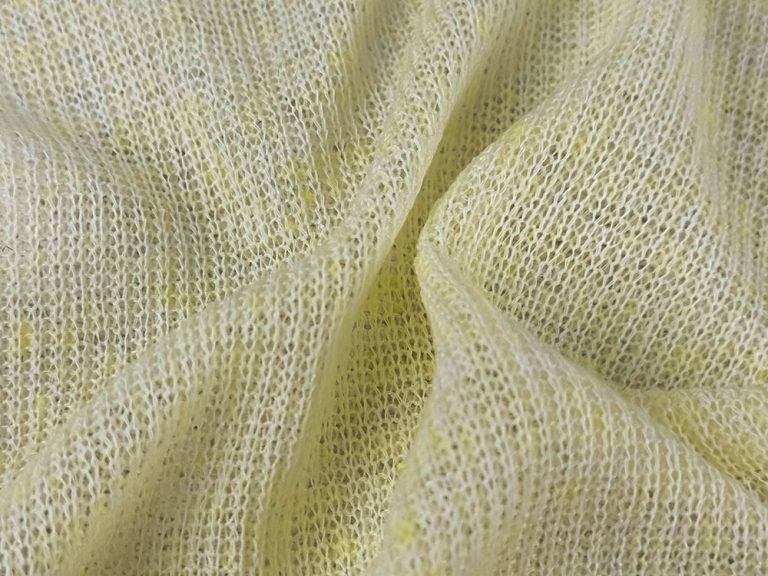
Linen Blend Knit Fabric for apparel brands, garment manufacturers and fabric sourcing teams.
Explore our online linen and bast-fibre blend knit range, backed by a library of 127 options.
| Item | Composition | Weight | Width | Details |
|---|---|---|---|---|
| LW26009 | 5% linen / 95% polyester | 140 GSM | 63″ (160 cm) | View specifications |
Our fabric library includes 127 linen and bast-fibre blend knit options. Contact us for more compositions, weights and colours for your collection.
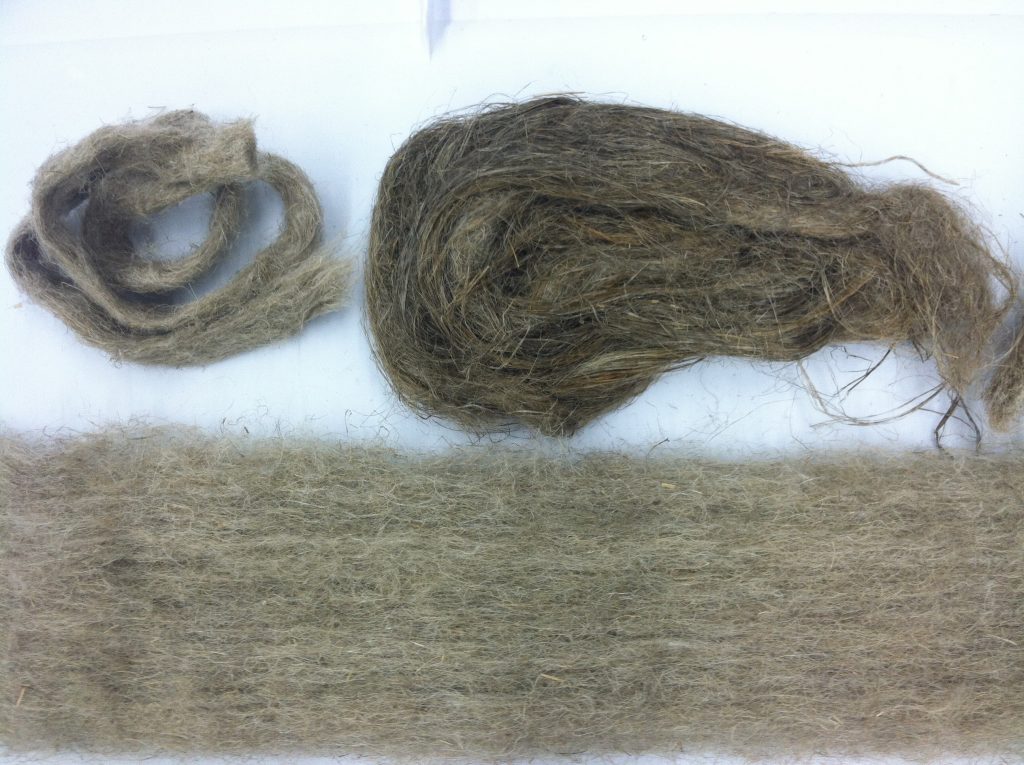
Linen comes from the stem of the flax plant, a bast fibre that is strong, dry to the touch and naturally irregular. Because it is stiff and has little give, linen is harder to knit than cotton, so most linen knits are blends: cotton, lyocell or polyester carries the softness and stretch, while linen adds a dry hand and a slubby, natural look. Our library holds 127 linen and bast-fibre blend qualities, mostly flax linen with a few hemp blends. They weigh mostly 150–210 GSM, and more than half are single jersey. The linen share is usually modest, about 15% in a typical quality, and only 11 are majority linen. High-linen knits crease more visibly and can feel firm before washing.
Cotton/linen jersey is our core linen range; lyocell blends add drape and polyester blends keep camisoles light.
| Fabric type | Fabric examples | Apparel applications |
|---|---|---|
| Cotton/linen and linen/cotton | 140–205 GSM, such as P1068 (70% cotton / 30% linen) at 160 GSM and P1169 (55% linen / 45% cotton) at 160 GSM | T-shirts, polo shirts and streetwear tees |
| Lyocell/linen and cotton/lyocell/linen | 120–215 GSM, such as D328 (67% lyocell / 28% linen / 5% spandex) at 210 GSM | Summer dresses, tees and loungewear |
| Polyester/linen | 130–165 GSM, such as LW26097 (88% polyester / 12% linen) at 140 GSM | Camisoles, tank tops and base layers |
Choose 145–175 GSM linen blends for camisoles and tanks, 145–200 GSM for dresses and loungewear, 150–205 GSM for T-shirts, 180–210 GSM for polo shirts, and 180–265 GSM for heavier streetwear tees.
For summer knits, linen blends are usually weighed against cotton and lyocell; each gives a different hand and look.
| Feature | Linen Blend Knit | Cotton Knit | Lyocell Knit |
|---|---|---|---|
| Surface | Natural slubs and a dry look | Even and matte | Smooth with a soft lustre |
| Hand feel | Dry, crisp and airy | Soft and familiar | Cool and fluid |
| Creasing | More visible as linen share rises | Moderate | Low |
| Typical weights in our library | 150–210 GSM | 200–320 GSM | 160–230 GSM |
| Typical garments | Summer tees, dresses and polos | Tees, sweatshirts and dresses | Tees, base layers and camisoles |
Xiwen Zhang, our co-founder and CEO, recommends these linen blends and weights for the warm-weather pieces where a dry, natural hand matters, drawing on our knit fabric experience since 2009.
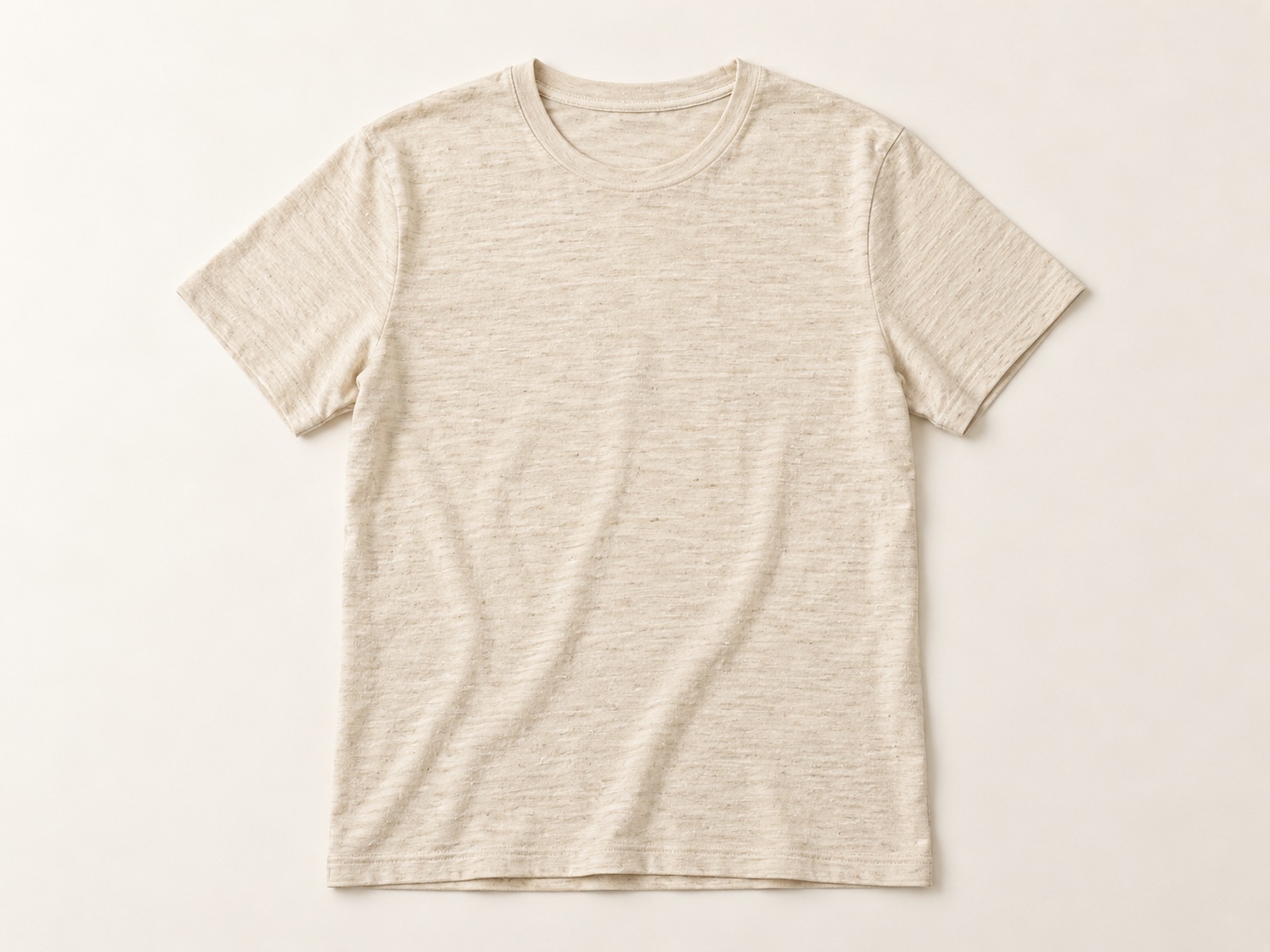
THREE IN FOUR LINEN QUALITIES
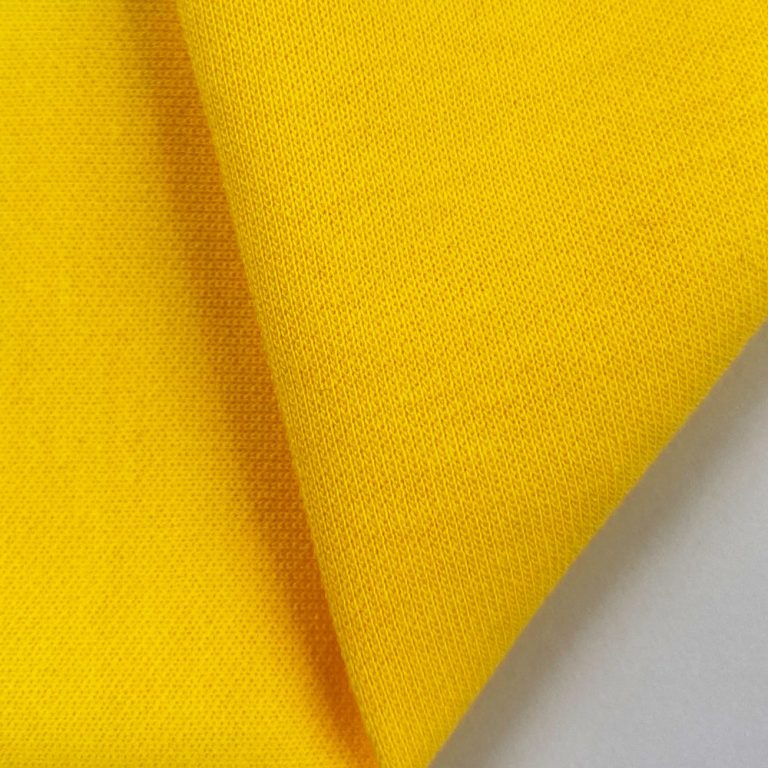
Choose 150–205 GSM cotton/linen jersey for summer T-shirts. T-shirts are by far the largest use for linen in our library, and the linen slubs give a plain tee a relaxed, natural look.
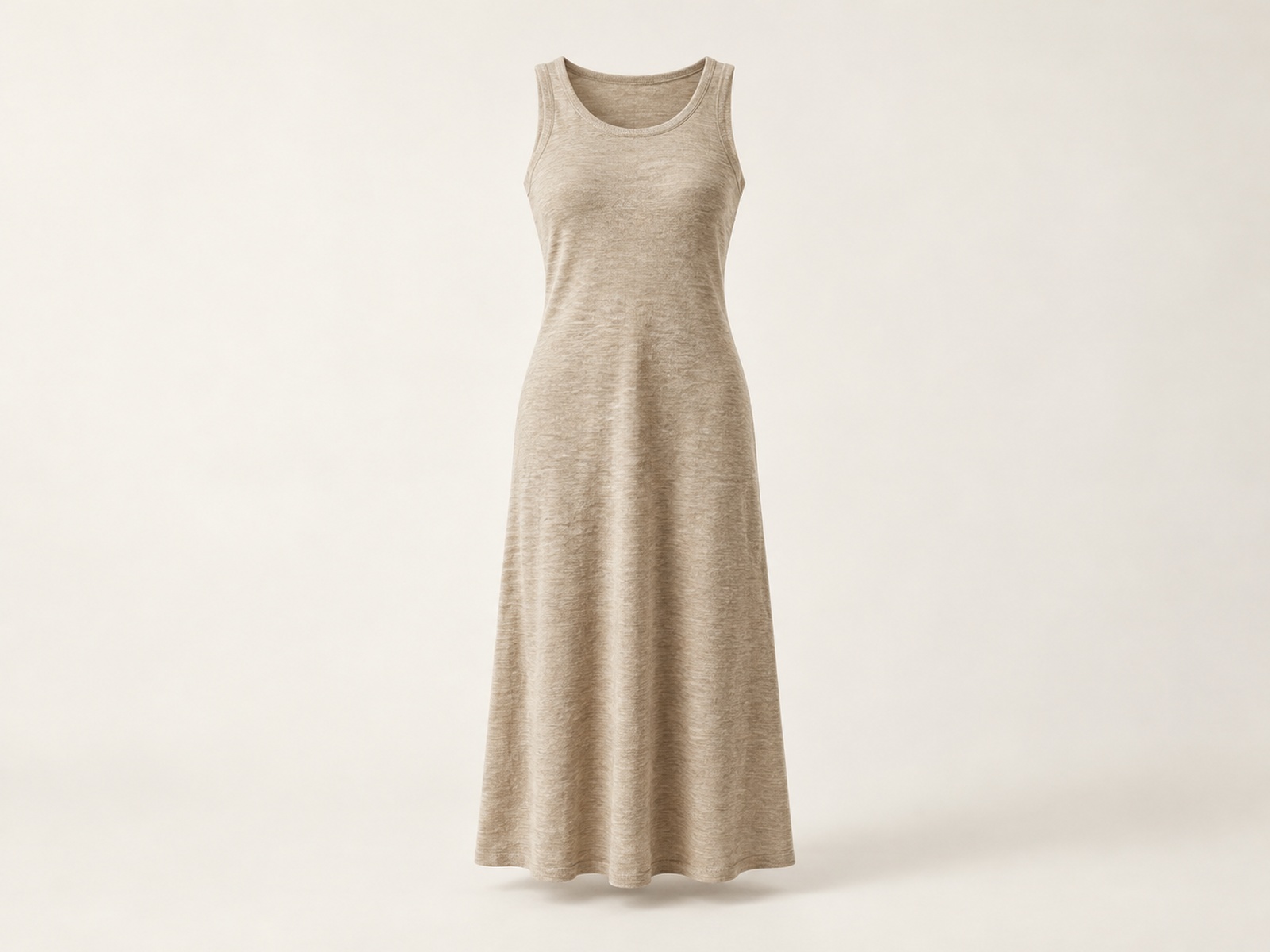
LINEN LOOK, KNIT COMFORT
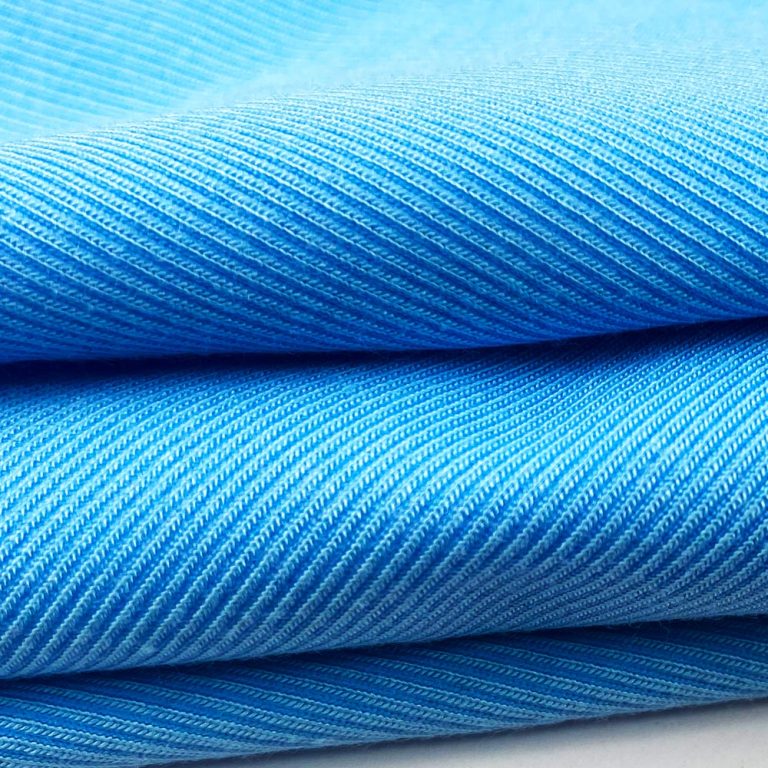
145–200 GSM lyocell/linen works well for summer T-shirt and slip dresses. Lyocell softens the linen and adds drape, so the dress keeps a linen look without the stiffness of woven linen.
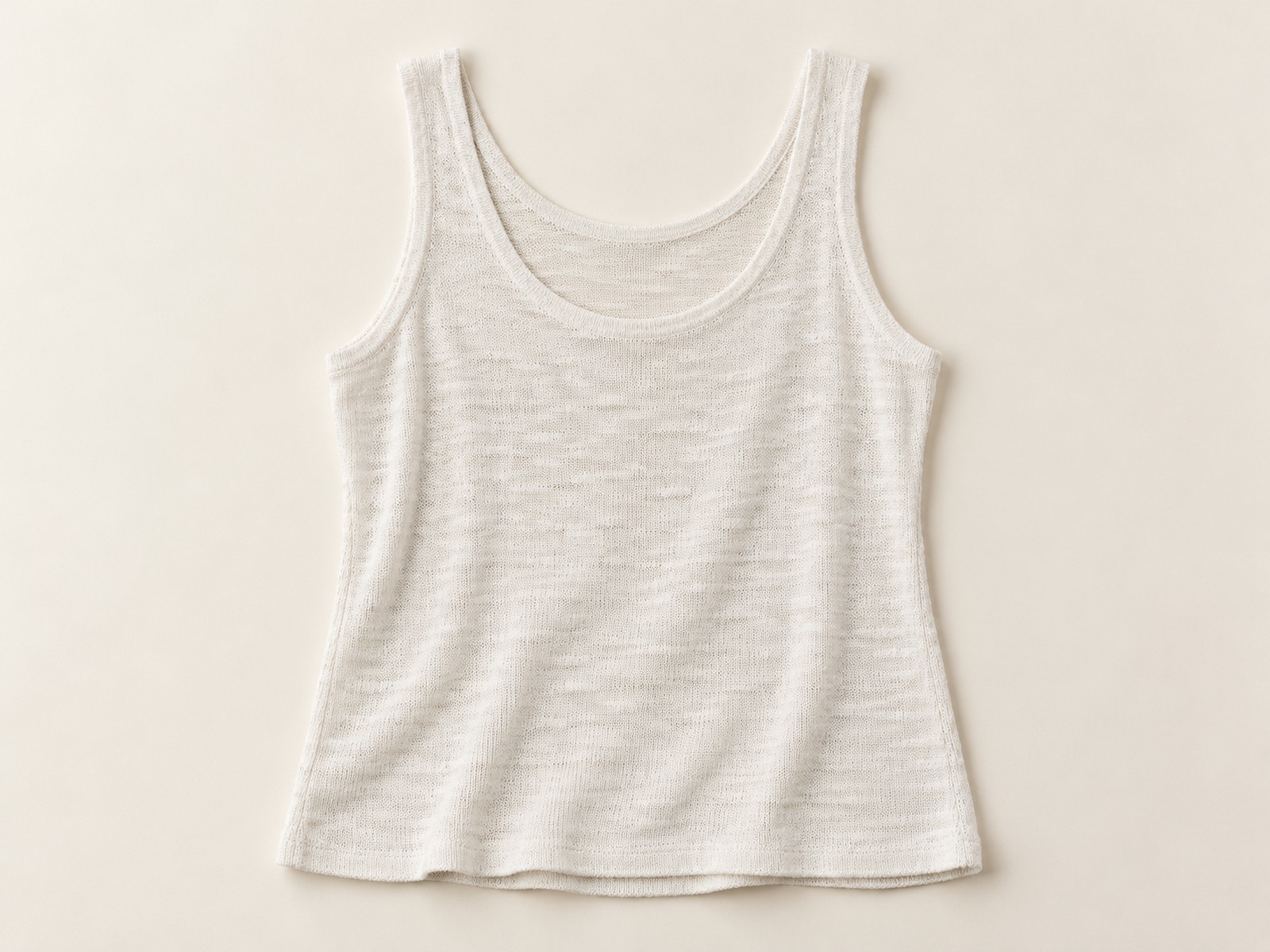
AIRY LAYERS
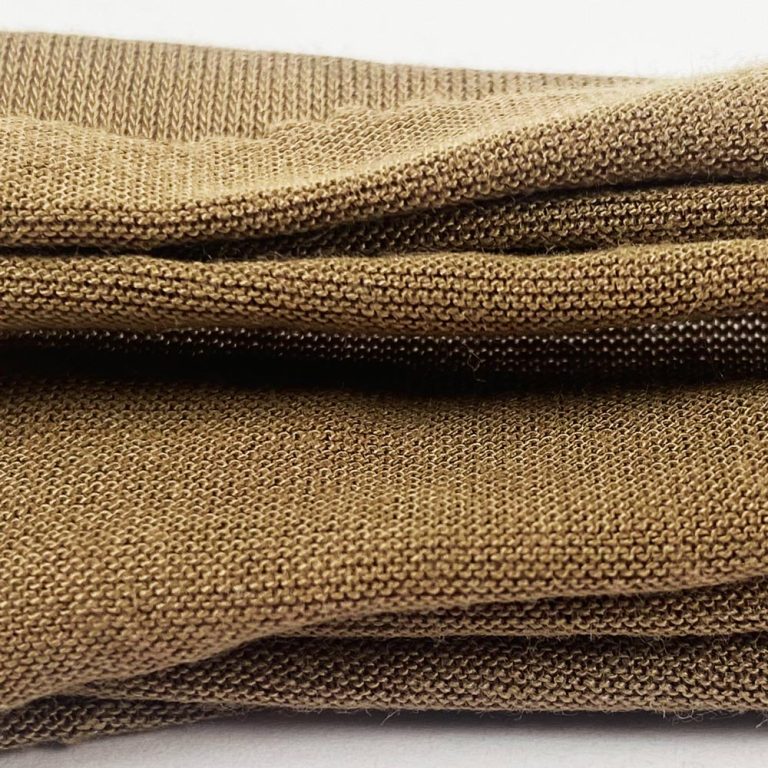
For camisoles and tanks, start with 145–175 GSM polyester/linen or linen/cotton. Light linen blends feel airy in heat, and polyester-rich versions keep their shape and colour through washing.
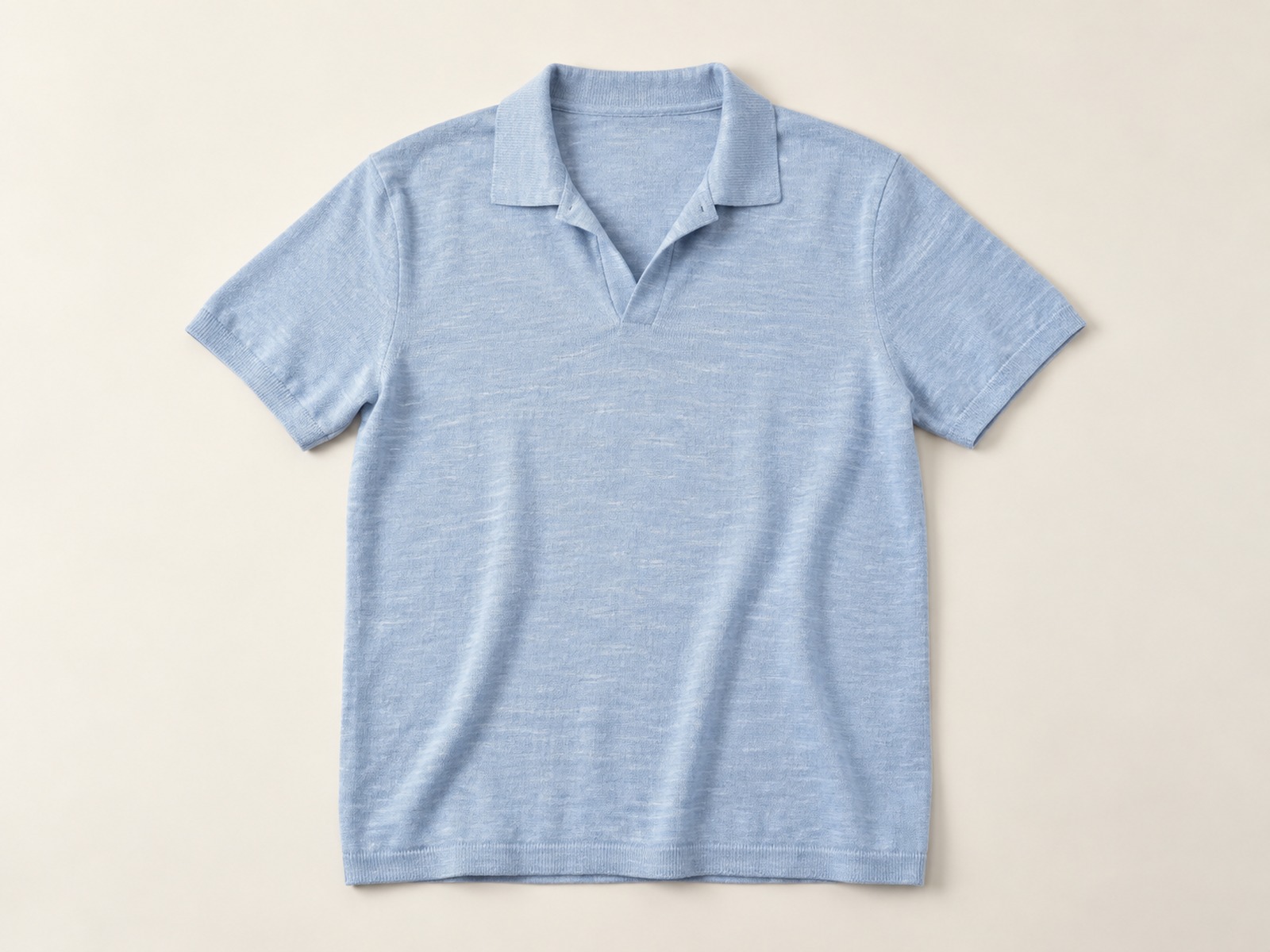
A RESORT-READY POLO
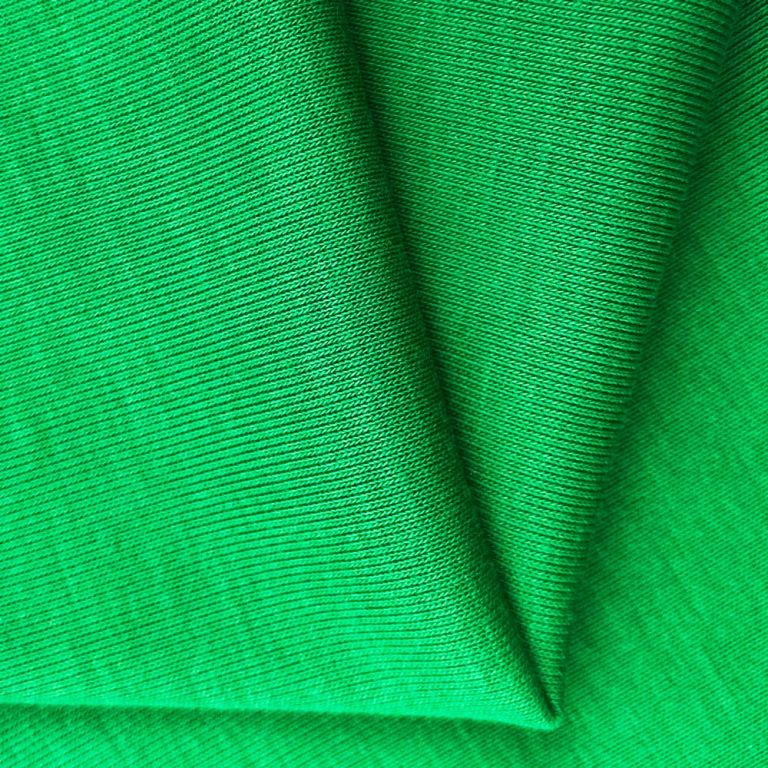
Choose 180–210 GSM cotton/linen for polo shirts. The slightly crisp hand keeps collars and plackets neat, and the linen texture suits resort and smart-casual collections.
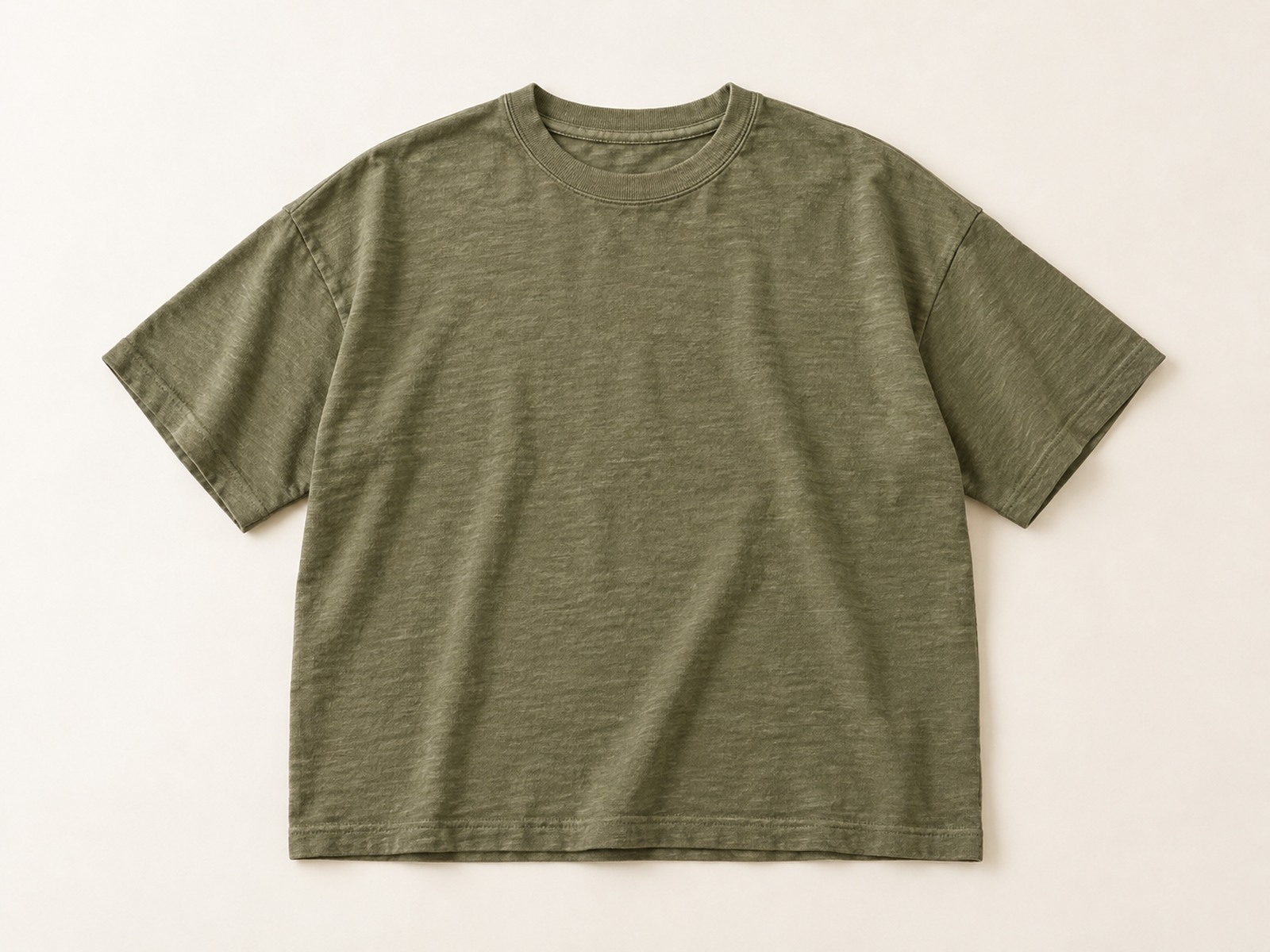
LINEN TEXTURE WITH BODY
For boxy streetwear tees, start with 180–265 GSM cotton/linen. The heavier jersey holds a dropped-shoulder shape, and the linen slubs add texture without a print.
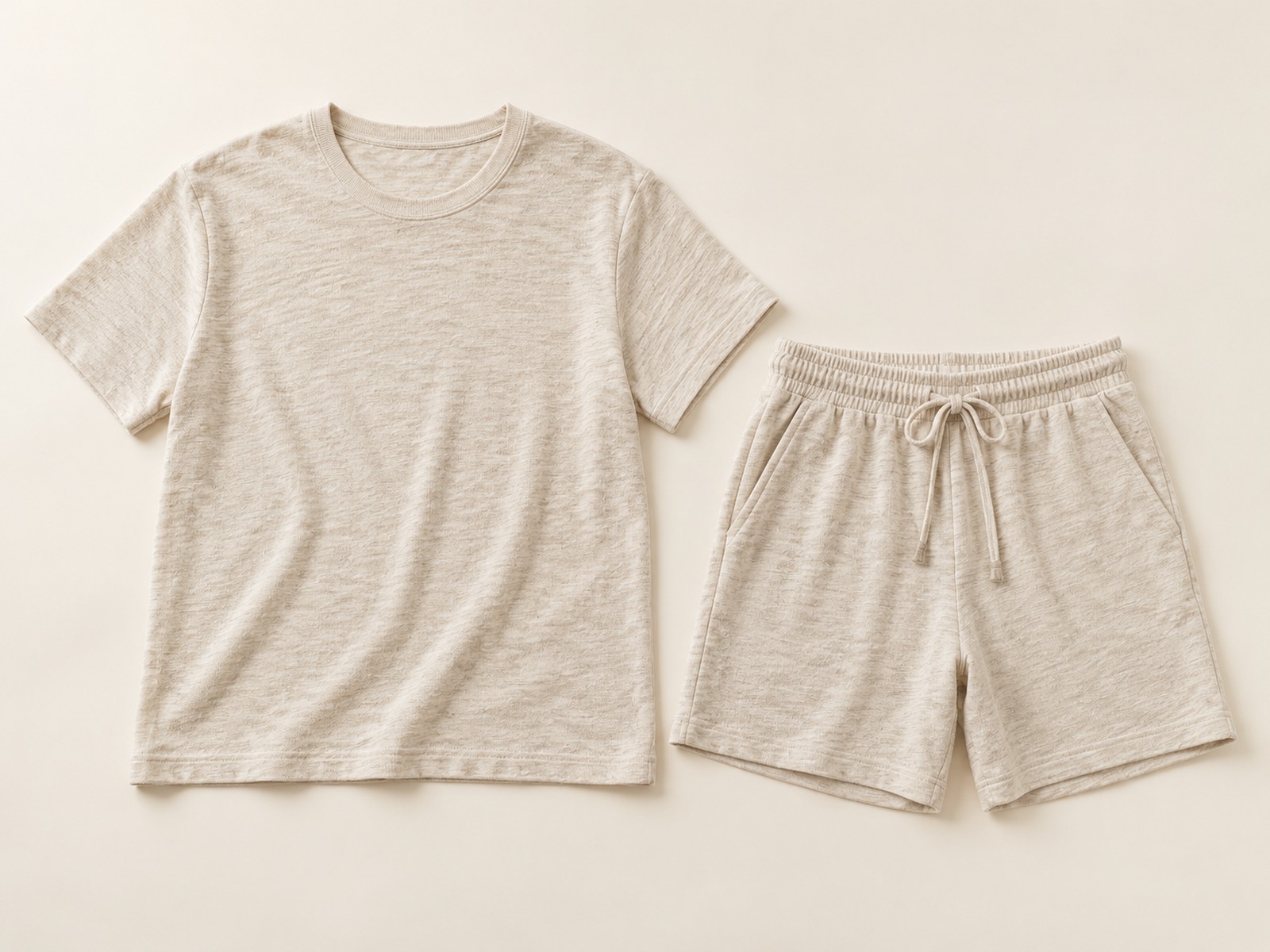
COOL AND BREATHABLE
145–195 GSM linen blends suit summer lounge sets and sleepwear. The open, dry hand feels cool on warm nights, and a lyocell blend keeps it soft against the skin.

No. Linen can be knitted, usually blended with cotton, lyocell or polyester. More than half of our 127 linen-blend qualities are single jersey, mostly 150–210 GSM.
Usually around 15%, and anywhere from a few percent to over 50%. Eleven qualities are majority linen. We state the exact share for each quality, so compare hand and creasing on a sample.
Most are flax linen, and a few use hemp, another bast fibre. Hemp should be labelled as hemp, not linen, so confirm the fibre type with us before you finalise care labels.
Shrinkage after washing, because cotton/linen and lyocell/linen blends relax in the wash; state the procedure and the drying method. Summer tees and dresses at 140–205 GSM in light shades also need light fastness on the 1–8 scale, and dark shades need washing fastness.
Stock fabric orders start at 1 roll (~23 kg) per colour. Custom-colour orders start at 200 kg per colour.
Compare complementary fibres and knit constructions for your next apparel collection.
Read practical guides to fibre blends, garment selection and knit construction.