Knit Fabric Manufacturer Since 2009 · China
Knit Fabric Manufacturer Since 2009 · China

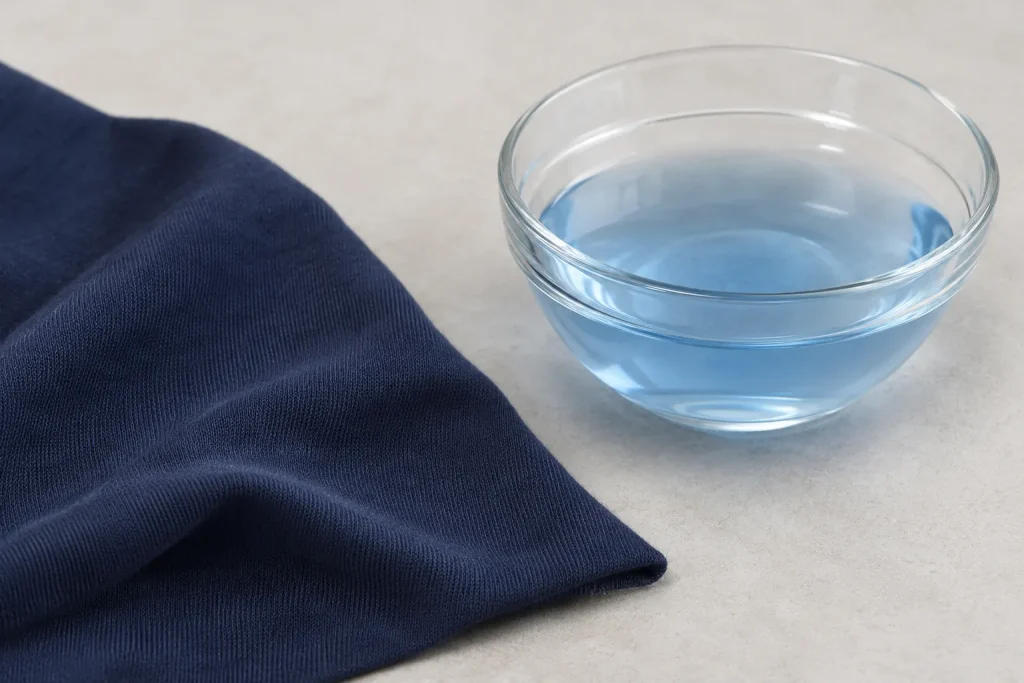
The water turns dark when you wash a new cotton top, yet the fabric seems much the same once dry. Another top leaves little visible colour in the water but starts looking grey around the folds. These experiences involve different observations: what enters the water, what leaves with detached fibres, how the remaining fabric looks and whether other materials pick up colour.
Those observations can overlap. A coloured fibre can leave a fabric while retaining its dye; unfixed colour can move into the wash liquor; and a change in the surface can alter the appearance of black. Understanding where the colour is helps explain the first wash more clearly than treating every change as the same kind of fading.
Reactive dyeing is an important route for colouring cotton. Reactive dyes can form chemical bonds with cellulose, but some dye remains unfixed, including material altered by hydrolysis during processing. Washing-off removes unfixed colour that remains associated with the fibres.
Fixation and washing-off therefore do different jobs. Establishing a bond with part of the dye does not remove everything else from the fabric. The dyeing sequence described in textile manufacturing includes an afterwashing stage for this reason. A Danish Environmental Protection Agency report on rinsing after reactive dyeing of cotton likewise identifies the removal of hydrolysed dye as a specific processing task.
This explains one possible source of colour in wash water. It does not identify the dye system of an unknown garment: cotton can also be coloured using other dye classes and printing methods. The water's appearance alone cannot tell you which route was used or how much the fabric itself has changed.
Colour can also leave on small pieces of dyed cotton. When a fibre fragment detaches, its colour may remain on that fragment. The coloured material in the water is then a piece of the textile, rather than simply dye released from an otherwise intact fibre.
Surface processing provides one manufacturing context. Biopolishing uses cellulase treatment to act on protruding cotton fibres and improve surface appearance. Fibre fragments can also be released through mechanical action. Seeing lint does not establish which process produced it, or whether all of it came from the item you are examining.
In a wash basin, coloured liquid and small fibres can be present together. Visible particles are useful observations, but the distinction is rarely as neat as “uniform colour means dye, floating material means fibres”. Fine fragments can be hard to see, and a tinted liquid does not rule out shedding.
The same applies to colour on a damp white cloth. It shows that coloured material transferred under those rubbing conditions. Identifying whether that transfer involved unfixed dye, coloured fibres or another part of the surface requires more information than the mark itself provides.
A smooth dark knit and one with fine raised fibres can look different even when their underlying colour is similar. Surface geometry influences reflection and scattering, while changes in gloss affect the impression of depth.
As a fabric is worn and washed, abrasion can disturb its surface. Fine fuzz may make a dark area look lighter or less even. Actual colour loss can occur at the same time, so texture provides part of the explanation rather than an automatic alternative diagnosis.
Research on moisture and surface geometry in dyed cotton found that these factors influence apparent colour. This helps explain why appearance needs to be compared under consistent conditions. A dark surface seen while damp provides a different reference from the same surface after drying.
To judge an apparent change, compare dry areas under the same light and viewing direction. Look at the surface as well as the shade: is the change concentrated on raised folds or rubbed areas, or does the fabric appear different throughout?
Residue is another possible contributor to a dull surface, but a pale photograph cannot identify detergent chemistry or hard-water deposits. The useful observation is the change itself and its position. Its cause may involve dye, fibre surface, deposits or a combination.
Within cotton knits in different fabric structures, fibre content alone leaves those surface differences unresolved. Yarn structure and finishing help explain why two cotton fabrics can retain a different visual character through use.
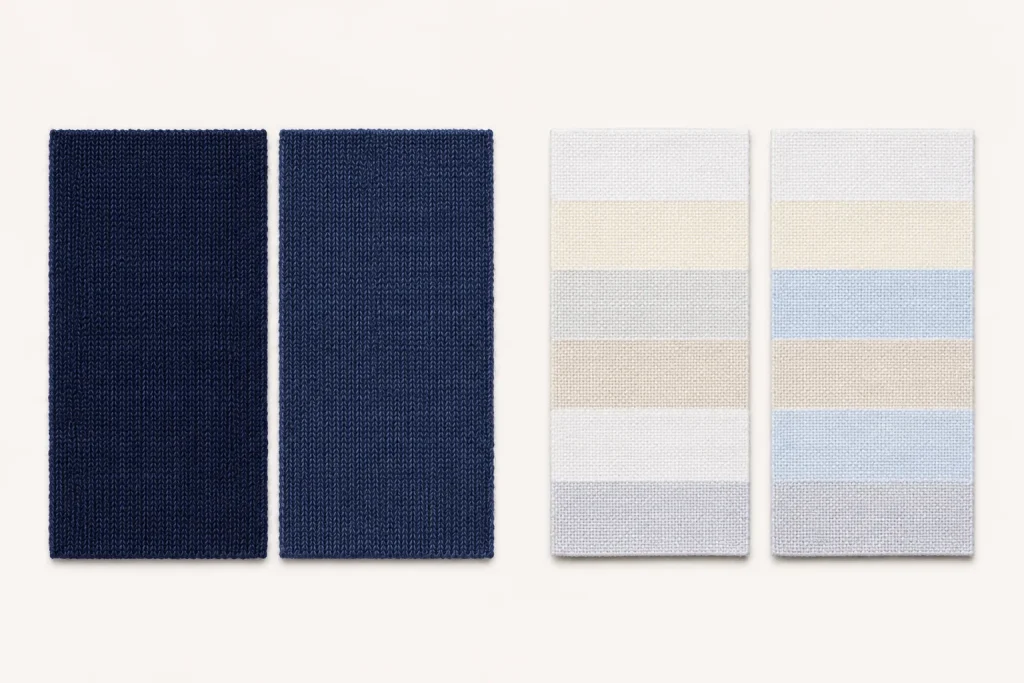
The distinction becomes clearer in a laundering-fastness assessment. ISO 105-C06 laundering colourfastness methods address resistance to domestic or commercial laundering under stated conditions. Evaluation includes colour change and staining, which concern different pieces of material.
Runtang's documented procedure tests a specimen with an adjacent multifibre fabric, then rinses and dries the materials before assessment. The original specimen and adjacent fabric are compared with their respective untested references. The procedure records the two assessments separately, using the appropriate grey scales and at least two assessors under standard lighting.
For colour-change assessment, the question is how the tested specimen differs from the original reference. This keeps attention on the fabric that the wearer will continue using.
A top that looks paler after washing needs that comparison even if no neighbouring garment was visibly stained. The original fabric's appearance and its tendency to transfer colour are separate parts of performance.
Drying before comparison also matters. A temporary wet-darkening effect could otherwise obscure the change being assessed. Consistent comparison conditions make it easier to distinguish an apparent shade difference from the effects of viewing the samples differently.
The adjacent multifibre fabric provides different fibre types on which to assess transferred colour. Its staining is compared with an untested reference, separately from the original specimen's colour change.
A dark specimen may still look dark while transferring enough colour to mark a lighter material. Conversely, a visible change in the original surface need not produce the same degree of staining on the adjacent fabric. This is why a single “colourfastness” statement needs to identify the result being discussed.
The everyday observations fit into this distinction as follows:
| Observation | What it directly concerns | Useful next comparison |
| Coloured wash water | Coloured material in the wash liquor | The dry fabric's appearance and any colour transferred elsewhere |
| Coloured lint | Detached coloured material | The fabric surface and the nature and extent of shedding |
| A paler dry surface | A change in appearance | A dry reference under matching light and viewing conditions |
| Colour on another fabric | Transfer or deposition | Staining under the relevant laundering or rubbing conditions |
Dry and wet rubbing assessments add information about a different exposure. ISO 105-X12 colourfastness to rubbing concerns colour rubbing off and staining other materials. Runtang's rubbing procedure evaluates dry and wet rubbing separately. A result under friction answers a different question from colour transfer during laundering.
The aim is to care for the fabric appropriately and understand whether its appearance and transfer behaviour are acceptable. Repeatedly washing a new item until the water looks completely clear is an unreliable way to establish that outcome. It adds laundering exposure without separating dye release, shedding and surface change.
Follow the item's care instructions, including the specified washing and drying conditions. Keep dark colours separate where the instructions require it. A fixed number of initial washes or one detergent recommendation cannot suit every dyeing and finishing system.
If transfer continues, the dry shade keeps changing noticeably or substantial lint persists, describe those observations separately when speaking to the seller. Photographs of the dry surface and a clear account of the care routine are more useful than a wash-water image alone. Initial colour release should neither be dismissed automatically as normal nor treated as a complete diagnosis of failure.
For fabric buyers, colourfastness requirements before bulk approval should identify the colour and fabric, the laundering conditions, and separate results for colour change and staining. Add dry and wet rubbing requirements where the intended use makes them relevant.
Coloured water alone cannot establish a test result. A colourfastness assessment uses specified conditions and evaluates the relevant colour change or staining. The wash liquor is an observation to investigate alongside the fabric and any affected materials.
Coloured fibres can deposit on another garment, and colour transfer may occur in the same wash. A deposit of coloured lint and dye staining are different mechanisms that can coexist. Their extent and persistence need to be assessed on the affected material.
No. The mark shows transfer under the rubbing conditions you used. It does not identify the chemical state of the colour or exclude coloured fibre fragments. A standard rubbing assessment provides controlled transfer information, rather than a chemical identification of the mark.
Wash-water hue alone cannot establish a fabric's production history. Identifying an overdyeing route requires manufacturing information or appropriate analysis. The relevant everyday questions remain how the dry fabric changes and whether colour transfers under its intended care conditions.
 Fabric Guide
Chenille Knit Fabric for Apparel: Softness, Pilling Risk and Bulk Approval
READ MORE Sourcing Guide
Activewear Knit Fabric Selection: What the Fiber Charts Miss and Sourcing Teams Need Before Bulk
READ MORE Fabric
Slub Fabric: The Secret to Creating Eye-Catching Apparel
READ MORE Technical Know-How
Air Permeability of Knit Fabric: Testing Methods and Sportswear Performance Implications
READ MORE Industry Insights
The Benefits of Polyester Viscose Spandex Fabric in Textile Industry
READ MORE