ISO
International standards from ISO. ISO 105 covers colour fastness; ISO 6330, 12945 and 13938 cover washing, pilling and bursting. Common in European specifications.
Tillverkare av stickat tyg sedan 2009 · Kina

TESTSTANDARDER
De flesta specifikationer för stickade tyger använder ISO-, AATCC- eller ASTM-metoder. Här är de likvärdiga metoderna för varje egenskap, den utrustning de delar och de skillnader som påverkar resultatet.
ISO 105-C06 ↔ AATCC 61
ISO 105-X12 ↔ AATCC 8
ISO 6330 ↔ AATCC 135
ASTM D5430 4-punkts
A brand’s test manual usually names one family. The methods measure similar properties, but their conditions differ.
International standards from ISO. ISO 105 covers colour fastness; ISO 6330, 12945 and 13938 cover washing, pilling and bursting. Common in European specifications.
Test methods from the American Association of Textile Chemists and Colorists (AATCC). Widely used by US brands, especially for colour fastness and dimensional change.
Standards from ASTM. ASTM D-series methods cover physical properties such as pilling and bursting, and the 4-point fabric inspection system (ASTM D5430).
Chinese GB/T standards often follow ISO methods, so they appear in the table too.
The methods we see most in knit fabric specifications, side by side.
| Property | ISO | AATCC / ASTM | GB/T | Utrustning | Main difference |
|---|---|---|---|---|---|
| Tvättäkthet | ISO 105-C06 | AATCC 61 | GB/T 12490 | Same type of launder tester with steel containers and balls | Detergent, temperature, liquor volume and number of steel balls differ. ISO A2S and AATCC 2A are different tests. |
| Rubbing (crocking) | ISO 105-X12 | AATCC 8 | GB/T 3920 | Same crockmeter (ISO uses a rectangular finger for pile fabrics) | Wet rubbing cloth pick-up: about 100% in ISO 105-X12, 65% in AATCC 8. |
| Perspiration | ISO 105-E04 | AATCC 15 | GB/T 3922 | Perspiration tester and oven | ISO tests an alkaline (pH 8.0) and an acid (pH 5.5) solution; AATCC 15 uses one acid solution. |
| Water | ISO 105-E01 | AATCC 107 | GB/T 5713 | Same apparatus as perspiration | Specimen handling and evaluation details differ. |
| Light | ISO 105-B02 | AATCC 16.3 | GB/T 8427 | Xenon arc tester | ISO grades against blue wool references 1–8; AATCC reports exposure in AATCC Fading Units. |
| Soaping | ISO 105-C10 | — | GB/T 3921 | Launder tester | No direct AATCC equivalent. |
| Dimensional change | ISO 6330 + ISO 5077 | AATCC 135 | GB/T 8629 + GB/T 8630 | Domestic washer and dryer | Machine type, wash programmes and drying differ, so results are not interchangeable. |
| Pilling | ISO 12945-1 (box), ISO 12945-2 (Martindale) | ASTM D3512 (random tumble), ASTM D4970 (Martindale) | GB/T 4802.3, GB/T 4802.2 | Different instruments for box and random tumble | Grades from different instruments cannot be compared. |
| Bursting strength | ISO 13938-1 (hydraulic) | ASTM D3786 (hydraulic), ASTM D6797 (ball) | GB/T 7742.1 (hydraulic), GB/T 19976 (ball) | Hydraulic tester or ball burst attachment | Hydraulic results are in kPa, ball results in N. |
| Grading scales | ISO 105-A02 / A03 | AATCC EP1 / EP2 | GB/T 250 / GB/T 251 | Grey scales, standard light cabinet | Same 1–5 principle. |
| Fabric inspection | — | ASTM D5430 (4-point system) | — | Inspection frame | Penalty points per 100 square yards. |
“Equivalent” means the methods measure the same property. Their results should not be converted or mixed.
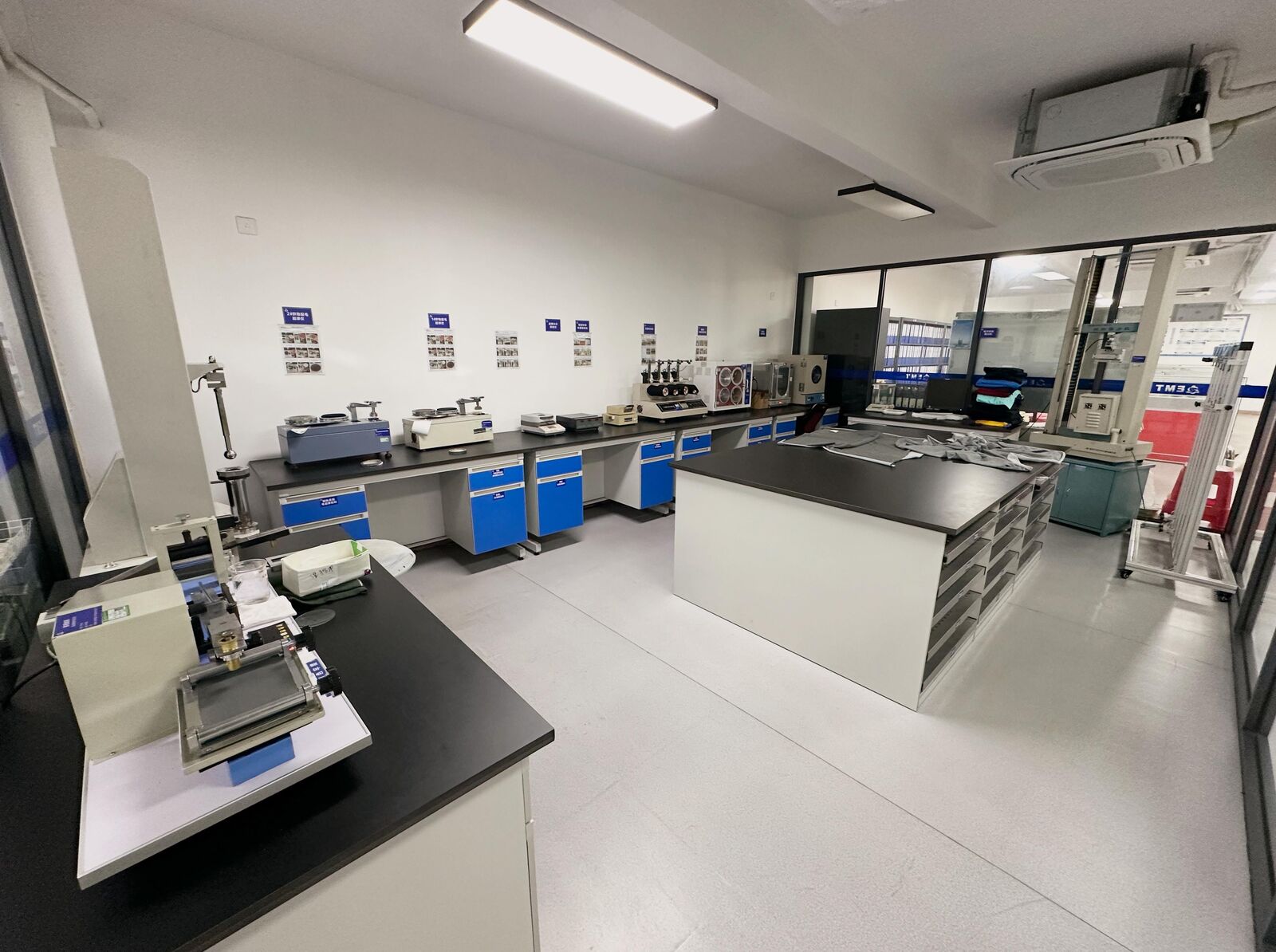
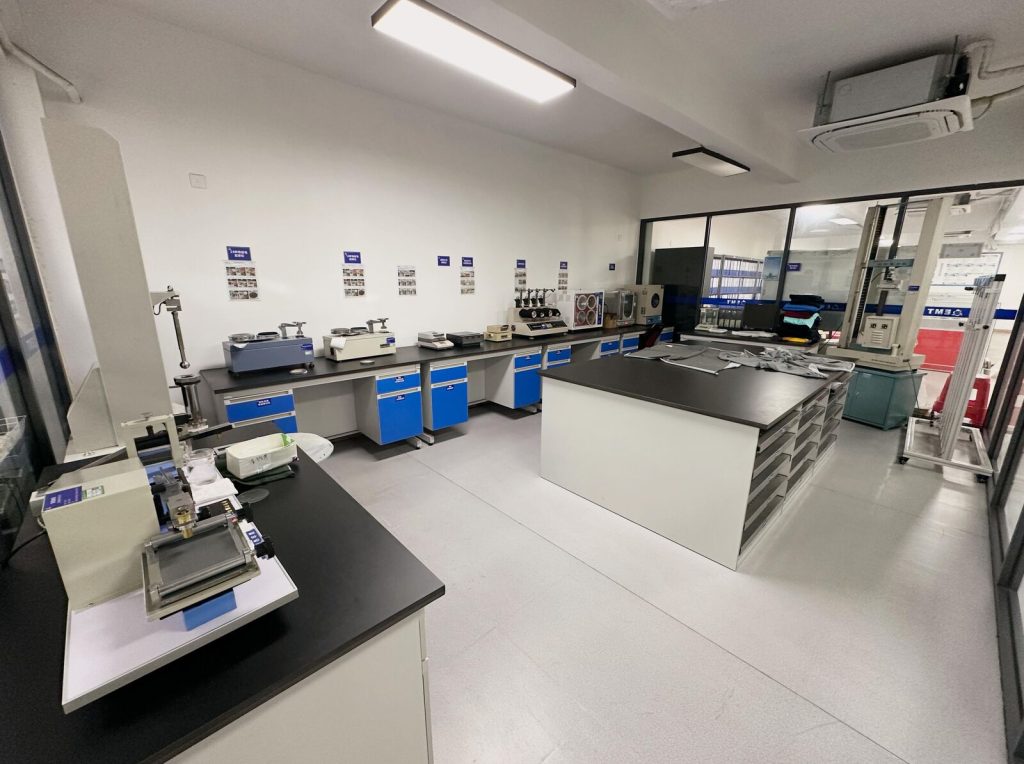
Much of our lab equipment serves both families: the same launder tester runs ISO 105-C06 and AATCC 61, and the same crockmeter runs ISO 105-X12 and AATCC 8. What changes is the consumables and the settings: detergent, multifibre fabric, rubbing cloth, water pick-up, temperature and time.
We set up each test to the exact method in your specification and record the method and procedure code in the result.
If your brand names AATCC or ISO, we test to that method. If you have no manual, we suggest methods suited to the fabric and your market.
An AATCC grade and an ISO grade for the same property can differ. Agree one method per property in the order.
Write the method with its procedure, for example “AATCC 61 2A” or “ISO 105-C06 A2S”, and the required grade.
No. Both are accelerated laundering tests run in similar equipment, but detergent, temperature, liquor volume and number of steel balls differ. AATCC 2A and ISO A2S are different tests, so their grades should not be compared directly.
Both use a crockmeter with a 9 N load. The main difference is the wet rubbing cloth: AATCC 8 wets it to about 65% pick-up, ISO 105-X12 to about 100%. Results differ, especially for dark shades.
Yes. Most instruments are shared; the consumables and settings change. We run each test to the method named in your specification.
The 4-point system for visual fabric inspection is ASTM D5430. Defects score 1 to 4 points by length, and the total is reported per 100 square yards.