Producent dzianin od 2009 · Chiny
Producent dzianin od 2009 · Chiny

Carbon footprint reporting is shifting from a brand-level exercise to a fabric-sourcing decision. As CSRD-aligned reporting expands across EU supply chains, apparel brands and suppliers are being asked for more material-level emissions data. For knit fabric sourcing, the practical question is not only whether a fabric is certified, but which fiber, dyeing, finishing, and documentation choices can be verified before bulk.
Under the GHG Protocol, purchased goods and services can be calculated using supplier-specific, hybrid, average-data, or spend-based methods. For apparel brands, this makes fabric sourcing data especially useful: fiber composition, finished fabric weight, dyeing route, and certification scope can all affect how a material is documented in Scope 3 Category 1 calculations.
For sourcing teams, this means fabric choices are no longer evaluated on price, GSM, and certification alone. Mills that can provide material-level data—or at a minimum, verifiable certifications tied to lower-impact fiber and process choices—are becoming a preferred sourcing option for brands building ESG reporting infrastructure. Preferred fiber reporting frameworks, including those published by the Textile Exchange Materials Market Report, track adoption rates of recycled and organic materials across the industry and serve as a reference point for brands setting procurement targets.
This shift in sourcing logic is also reflected in growing interest in recycled knit fabric demand as brands seek to document fiber-level substitutions within existing Scope 3 reporting structures and demonstrate progress against preferred-materials targets.
Not all knit fibers carry the same upstream carbon profile. The difference between virgin synthetic fibers and recycled or certified natural alternatives can be substantial at the material production stage—before dyeing or finishing has begun. The table below provides directional comparisons; actual footprint values vary by mill location, energy grid mix, and finishing process configuration.
| Fiber Type | Carbon Profile Direction | Key Sourcing Consideration |
|---|---|---|
| Virgin polyester | Higher upstream impact | Fossil fuel-derived; energy-intensive polymer production stage |
| Recycled polyester (GRS-certified) | Lower than virgin | Diverts post-consumer waste; requires a GRS Transaction Certificate to verify |
| Recycled nylon (GRS-certified) | Lower than virgin | Similar chain-of-custody logic; confirm GRS scope covers fiber-to-fabric |
| Conventional cotton | Variable | Depends on farming region, irrigation intensity, and water usage |
| GOTS-certified organic cotton | Directionally lower | Restricted synthetic inputs; full-chain certification required |
Use this table as a sourcing-screening tool, not as a final LCA result. Final footprint calculations still depend on mill energy mix, dyeing route, finishing process, order weight, and the calculation method used by the brand.
These are directional indicators, not fixed CO₂ values. For brands substituting virgin polyester with recycled options in jersey knit fabric, mesh, or other fabric constructions, the Global Recycled Standard (GRS) Transaction Certificate is the document that confirms the fiber substitution occurred at the mill level and can be reported at the product level. For details on how recycled polyester performs across knit fabric applications—including stretch behavior, composition options, and certification compatibility—product-level specification data covers the key variables sourcing teams need before sampling.
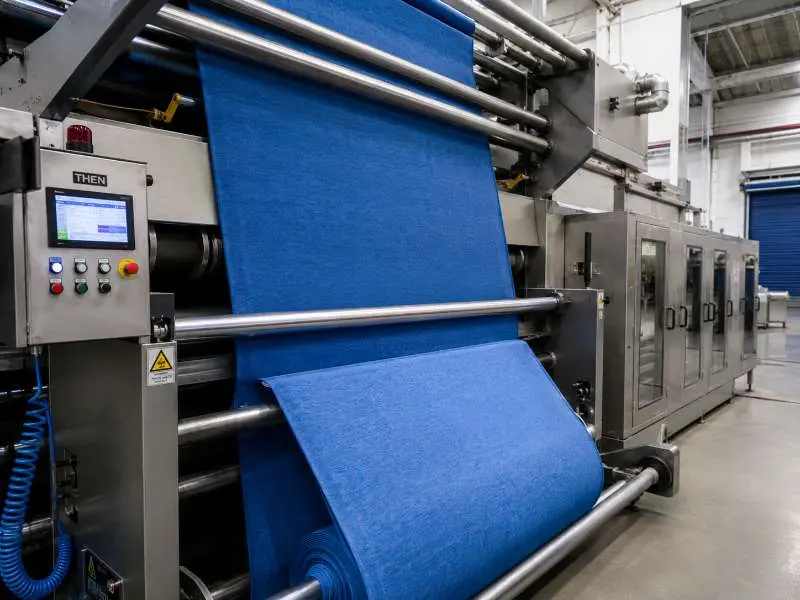
Fiber choice receives most of the attention in sustainability sourcing conversations, but the dyeing and finishing stage is where process emissions are often the largest. Recent process-level research on textile finishing also points to steam and heat consumption as a major driver of finishing-stage emissions. For sourcing teams, this means dyeing and finishing energy inputs should be checked separately from fiber certification. For knit fabric specifically, the finishing sequence—dyeing, heat-setting, and wash treatments—involves multiple energy-intensive process steps that can vary significantly across facilities.
A facility running on renewable energy or operating a closed-loop water system may carry a materially different process emissions profile than one drawing from a conventional grid mix. Sourcing teams can ask the following questions before bulk placement:
Most mills will not have fully structured data ready. However, a mill’s ability and willingness to engage with these questions is itself a signal of how far along the supply chain it is in terms of emissions traceability—and how capable a partner it can be as reporting requirements expand.
Certifications are the most accessible documentation path for carbon-adjacent claims in textile sourcing, but their scope is specific and should not be stretched beyond what they verify. Misreading a certificate’s coverage is one of the more common points of failure in Scope 3 reporting for apparel brands.
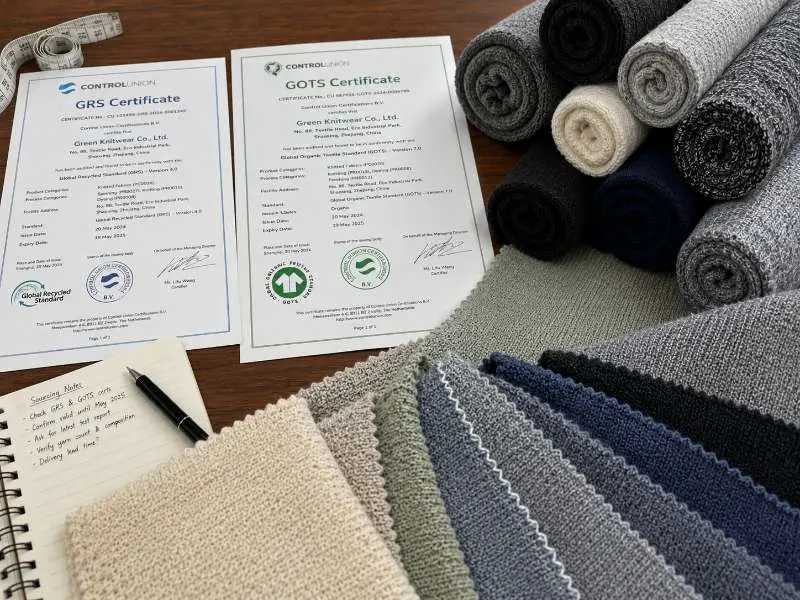
The Global Recycled Standard (GRS) verifies recycled fiber content and tracks the chain of custody from raw material through to finished fabric. It does not certify a specific carbon footprint value, but the GRS Transaction Certificate provides the documented link between recycled fiber procurement and the finished knit fabric—supporting Scope 3 Category 1 emissions calculations in a way that general brand statements cannot.
The Global Organic Textile Standard (GOTS) covers certified organic fiber production through to the manufacturing stage, including restricted chemical inputs and wastewater management requirements. GOTS certification does not certify carbon neutrality, but its input restrictions—particularly around synthetic agrochemicals—generally correspond to lower upstream emissions in the fiber production stage.
OEKO-TEX® Standard 100 tests finished textiles for harmful substances. It is a product safety standard. It does not cover mill energy consumption, water use, or production-stage carbon emissions, and it should not be cited as evidence of low carbon impact in a Scope 3 calculation or retail sustainability audit.
Understanding the boundary of each certification is essential when completing Scope 3 questionnaires or responding to retail partner sustainability verification requests. Runtang Tex offers selected knit fabric options with Global Recycled Standard (GRS), Global Organic Textile Standard (GOTS), and OEKO-TEX® Standard 100 documentation. Certification scope should be confirmed at the sampling stage, and transaction documents can be provided for eligible orders where the certified material and processing scope apply. Production capabilities and certification scope details are available on the O nas.
Translating carbon tracking intent into sourcing practice requires specific document and data requests—not general ESG questionnaires. The following checkpoints are structured for sourcing teams working with knit fabric mills, whether for jersey, fleece, mesh, or other construction types:
GRS certification verifies recycled fiber content and chain of custody—it does not certify a specific carbon reduction value. However, substituting virgin polyester with GRS-certified recycled polyester in a knit fabric construction is generally associated with lower upstream material production emissions. The GRS Transaction Certificate also provides the documentation chain needed to substantiate a recycled content claim within Scope 3 Category 1 footprint calculations, which is what most apparel sustainability reporting frameworks actually require from the fabric sourcing stage.
There is no universal answer. The actual footprint of each depends on mill location, the energy grid powering production, and the finishing processes applied. Recycled polyester avoids the virgin polymer production stage, which is fossil fuel-derived and energy-intensive. GOTS-certified organic cotton avoids synthetic agrochemicals upstream, which have their own embedded emissions. Both can be appropriate sourcing choices depending on your brand’s reporting framework, product specification, and retail partner requirements. The more reliable approach is to request certification documentation for both options and compare them within your LCA methodology or Scope 3 Category 1 calculator, rather than relying on general material comparisons.
Sourcing knit fabric with certification documentation support starts with the right mill. Request a sample from Runtang Tex and specify which certification scope documents—GRS, GOTS, or OEKO-TEX® Standard 100—you need alongside the sample.
 Dzianina
 welurowa: luksusowy wybór dla codziennego komfortu
CZYTAJ WIĘCEJ Wiedza branżowa
4 rodzaje ważnych materiałów odzieżowych
CZYTAJ WIĘCEJ Wiedza branżowa
Podwójna dzianina kontra dzianina pojedyncza
CZYTAJ WIĘCEJ Przewodnik po zaopatrzeniu
Zaopatrzenie w dzianinę na odzież domową: chwyt, powrót do wymiarów i krycie przed produkcją seryjną
CZYTAJ WIĘCEJ Dzianina
Zasady pielęgnacji dzianin: wskazówki dotyczące prania i konserwacji dla trwałej odzieży
CZYTAJ WIĘCEJ