Breistoffenfabrikant sinds 2009 · China
Breistoffenfabrikant sinds 2009 · China

Purl knit fabric offers a reversible raised texture for sweaters, cardigans and accessories, but bulk production is not just a texture decision. Buyers should verify stretch direction, width stability, shrinkage and dye consistency before approving purl knit fabric for knitwear production.
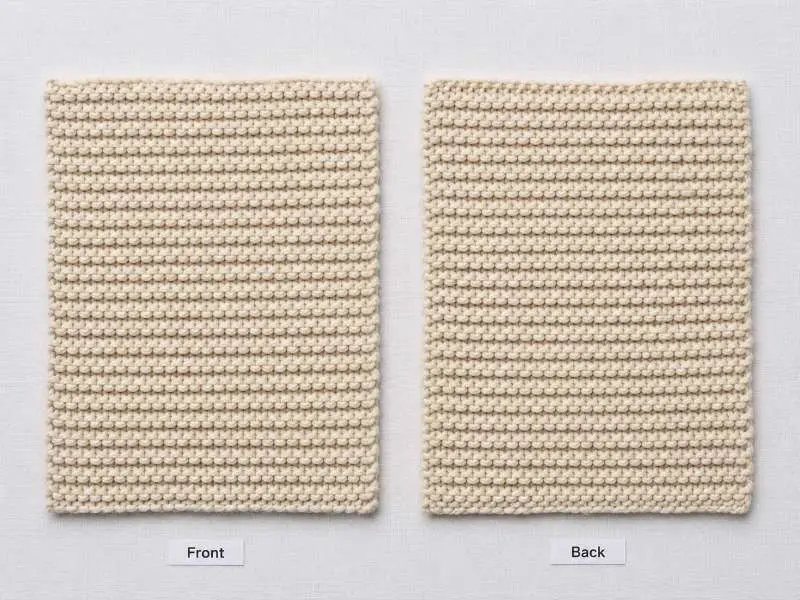
In a standard jersey knit, each wale runs in a single direction — knit stitches form the face, purl stitches form the back. In a purl knit, the stitch direction alternates course by course within each wale, producing loops that face both outward and inward in sequence. The result is a fabric that presents horizontal ridges on both faces rather than one smooth face and one textured back.
This structural difference matters at cutting and grading. Purl knit generally lies flatter at cut edges than single jersey, which can reduce edge-curling problems, but raw edges still need approval based on the garment construction. Its stretch behavior should be measured in both length and width, because purl constructions often show stronger lengthwise give than jersey-trained pattern teams may expect.
Structure comparison — purl knit vs jersey vs rib:
| Structure | Purl Knit | Jersey | Rib Knit |
|---|---|---|---|
| Face/Back | Identical on both sides | Different on each side | Identical on both sides |
| Primary Stretch | Often stronger lengthwise; verify both axes | Often stronger widthwise | High widthwise recovery, depending on rib ratio |
| Lies Flat | Generally flat; low edge curl | Often curls at cut edges | Generally flat |
| Machine Type | Purl / links-links machine | Circular knit machine | Rib machine |
| Typical End-Use | Sweaters, knitwear, scarves | T-shirts, base layers | Cuffs, collars, bodywear |
Purl knit is produced on link-and-link machines (also called purl machines), which use double-headed needles to transfer stitches between front and back needle beds. This transfer mechanism is the source of both the fabric's reversible structure and its slower production speed relative to circular jersey or rib equipment.
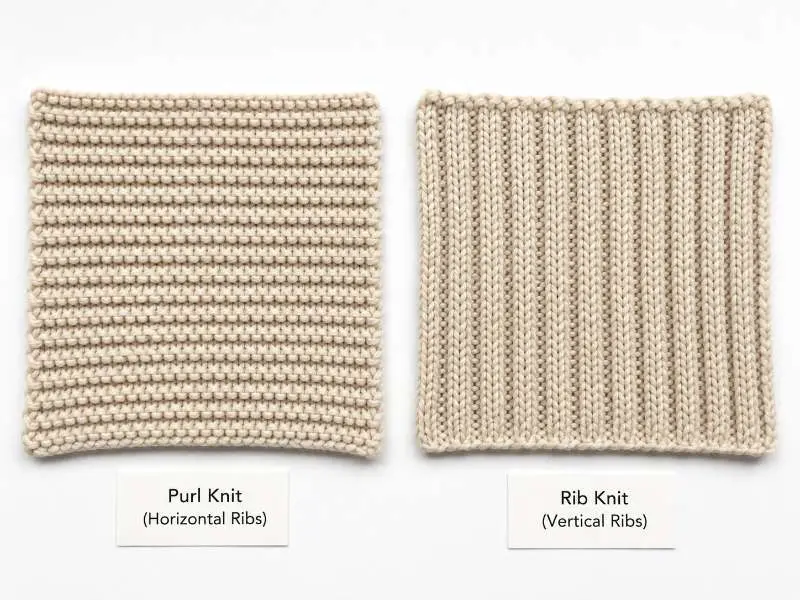
Purl knit's lengthwise stretch — rather than the widthwise stretch typical of jersey — makes it well-suited for garment categories where vertical give matters: drop-shoulder sweaters, long-line cardigans, and accessories like scarves and beanies knitted in the round. The fabric's lengthwise recovery can vary depending on yarn construction and any spandex content included in the blend, so stretch and recovery specifications should be confirmed at the sampling stage rather than assumed.
Weight selection for purl knit depends on end-use. Lighter constructions — often used for layering pieces or spring knitwear — may use finer-count yarns with a more open stitch, while heavier-weight options suited to outerwear or structured sweaters use bulkier yarns with a tighter gauge. GSM ranges can vary significantly depending on construction and finishing, and the same nominal GSM may feel perceptibly heavier in a purl knit than in a comparable jersey due to the raised surface trapping air between the ridges. Buyers should request a pre-production weight confirmation rather than relying on GSM targets alone. If the collection needs a lighter openwork effect instead of a reversible ridge texture, pointelle fabric may be the more relevant development route.
Fiber choice also affects how purl texture performs over time. Wool and wool-blend yarns can support clear ridge definition, but wash behavior should be checked to reduce felting or surface change risk. Cotton-based purl knits may offer better dimensional control in some constructions, but lengthwise relaxation should still be tested after laundering. Blends with a small percentage of elastane can improve recovery, though compatibility depends on yarn feeding and machine setup.
The reversible structure makes purl knit sensitive to feed tension, machine settings and finishing tension. If these variables shift during bulk production, the issue may appear as roll-to-roll width variation, inconsistent GSM or uneven ridge definition. Buyers should confirm these checks on first-off samples before approving bulk yardage.
Width consistency is the first variable to monitor. Purl knit can narrow unevenly during finishing, particularly if tension settings differ between the knitting stage and the heat-setting or washing phase. Depending on construction, the fabric may show more shrinkage in the lengthwise direction than across the width — the opposite of what jersey buyers typically expect. Pre-production shrinkage testing should follow an agreed method for dimensional changes after home laundering, covering both length and width before bulk cutting.
Dye uniformity is a separate concern. The raised surface of purl knit creates air pockets that can interfere with dye liquor penetration during piece dyeing. Darker shades or heavily saturated colors may show slight tone differences between the ridge peaks and the valleys between them — visible under raking light. This is worth checking on the approved lab dip and on first-off samples before committing to bulk yardage.
Machine output for purl knit is typically lower than for equivalent jersey constructions on circular equipment, which affects lead time and minimum order quantity planning. Buyers sourcing purl knit for the first time should confirm production scheduling with their supplier early, particularly for time-sensitive seasonal orders.
Because purl knit introduces more production variables than standard jersey or interlock, the sampling approval stage carries more weight. The following checks should be completed on pre-production samples before bulk is confirmed:
| Check Point | What to Verify | Why It Matters |
|---|---|---|
| Surface consistency | Both faces show identical texture density and stitch definition | Reversible end-use fails if one side is looser |
| Width stability (pre/post wash) | Measure fabric width before and after one wash cycle | Purl structure can narrow more than jersey under heat |
| Lengthwise stretch and recovery | Measure stretch and recovery in both length and width using the buyer’s approved test method | Purl constructions may behave differently from jersey during grading and wear testing |
| Dye penetration uniformity | Check raised purl loops under light — uneven shade indicates poor dye penetration | A textured surface can trap air pockets during dyeing |
| Trim compatibility | Stretch-test the purl body against the rib cuffs or collars in the same order | Tension mismatch between components causes seam puckering |
| GSM consistency across roll | Check GSM at both ends and the center of a roll | GSM variation may appear if machine settings or yarn feed tension shift during longer runs |
For brands sourcing purl knit alongside cable knit fabric or other structured knitwear constructions in the same collection, it is worth confirming that shrinkage specifications are aligned across fabrics — tension and relaxation behavior can differ enough between construction types to cause seam mismatches at the garment assembly stage if not caught during sampling.
MOQ for purl knit fabric is generally higher than for jersey or rib due to the lower machine output rate and the setup time required for needle bed configuration. Solid-color bulk orders typically require a minimum per color — exact quantities depend on yarn count and construction. Brands ordering purl knit for the first time should discuss MOQ requirements with their supplier before sampling, since production scheduling for purl machines differs from standard circular knit lead times.
Yes, though the application depends on weight and construction. Lighter purl knit constructions can work for structured tops, relaxed-fit dresses, or layering pieces where the reversible surface adds design value without excessive bulk. Heavier constructions are more typically used for sweaters, cardigans, and cold-weather accessories. The fabric's flat, non-curling behavior makes it easier to handle in panel-based construction than jersey. Confirming the intended end-use with your supplier during sampling allows them to recommend appropriate gauge and finishing options.
Planning a purl knit development? Request a sample to confirm texture, weight, and shrinkage performance against your spec before committing to bulk production.
 Stoffengids
Fleece voor hoodies: GSM, ruwen en risico op pilling
LEES MEER Technische knowhow
Productieproces van double knit-stof
LEES MEER Inkoopgids
Breifabric sourcing voor loungewear: handgevoel, herstel en dekking vóór bulk
LEES MEER Trends & branche
Vraag naar gerecyclede breistof voor kleding: wat de inkoopbeslissingen van merken stuurt
LEES MEER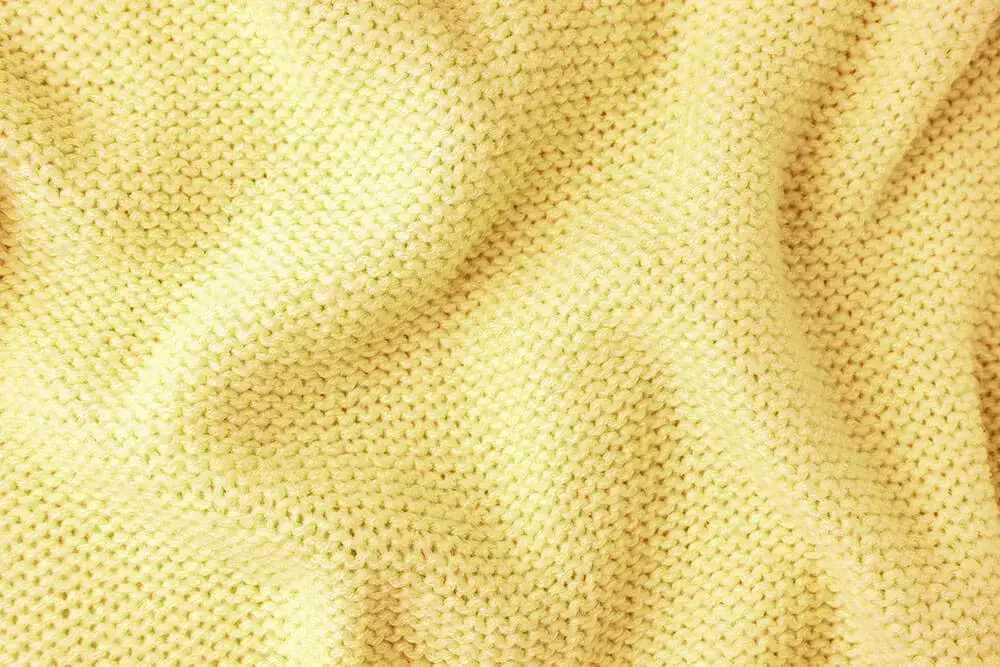 Technische knowhow
Gebreide stoffen vs. geweven stoffen
LEES MEER