Breistoffenfabrikant sinds 2009 · China
Breistoffenfabrikant sinds 2009 · China

In the realm of contemporary fabrics, where creativity and functionality meet together, scuba fabric has become a distinctive material with practicality, adaptability, and design. Scuba fabric is frequently valued for more than just its smooth, soft, and structured appearance.
The qualities of the fabric meet the needs for comfort in a variety of industries. It applies from functional sportswear to high-end couture. This article revolves around the qualities and uses of Scuba fabric that make it unique among all other fabrics.
Scuba fabric refers to a double-knit fabric composed of a polyester and spandex or elastane blend. Because of its composition, the fabric can replicate the strength and structure of neoprene in a more lightweight form. It is a distinctive fabric option for numerous applications.
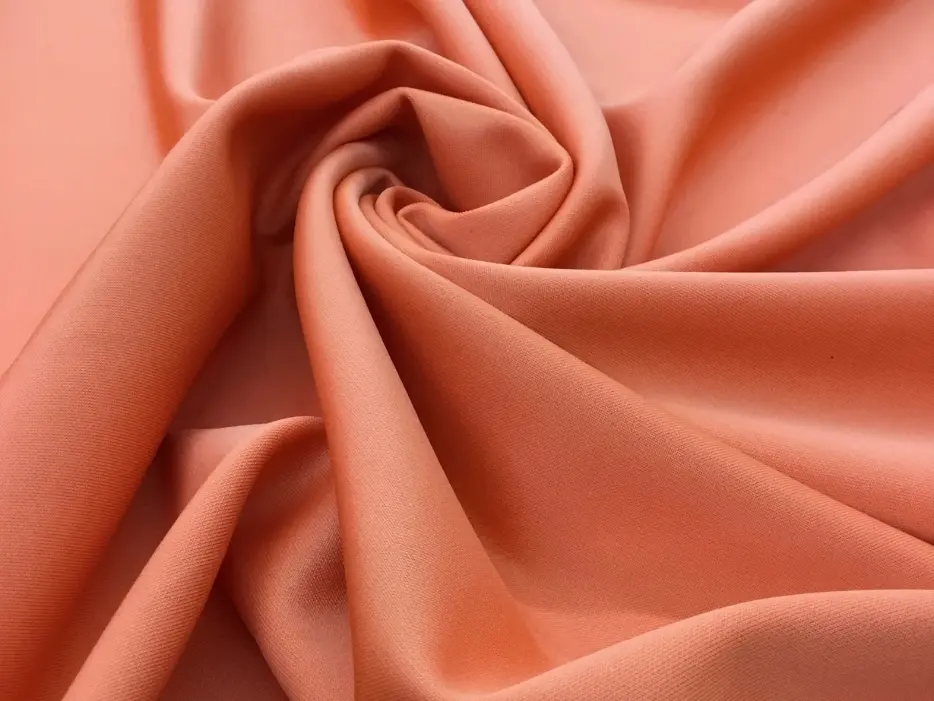
The reasons are its four-way stretch, smooth, silky texture, and remarkable durability.
Scuba fabric is also named Neoprene. It was first created for scuba diving wetsuits. However, a variation of this material that provides comparable qualities without being as thick or heavy is what we typically see in garments.
Scuba fabric is made from a blend of spandex and polyester. The fabric has extensive use in fashion, furniture, and sportswear. Scuba is incredibly functional and appropriate for a variety of applications. Besides, it resists creases, stretches easily, and holds its shape over time.
Scuba fabric's benefits are due to its particular composition. The polyester offers strength and durability, while the spandex adds elasticity, allowing the fabric to hold its shape even after repeated use. The double-knit structure provides thickness without the bulk of typical neoprene, allowing clothing to have a fitted appearance while maintaining comfort. Furthermore, the fabric's tight weave gives it a little gloss, creating a sleek, modern look that appeals to both designers and customers.
There are numerous varieties of scuba fabric, and each has unique qualities that make it appropriate for a range of uses. An outline of the primary varieties of scuba fabric is provided below:
1. Ordinary Scuba: The most popular kind of scuba fabric is composed of a polyester and spandex (or elastane) combination. Its smooth surface, four-way stretch, and medium weight define it. Because it retains its shape and is comfortable, standard scuba fabric is frequently used in fashion items, including dresses, skirts, and structured tops.
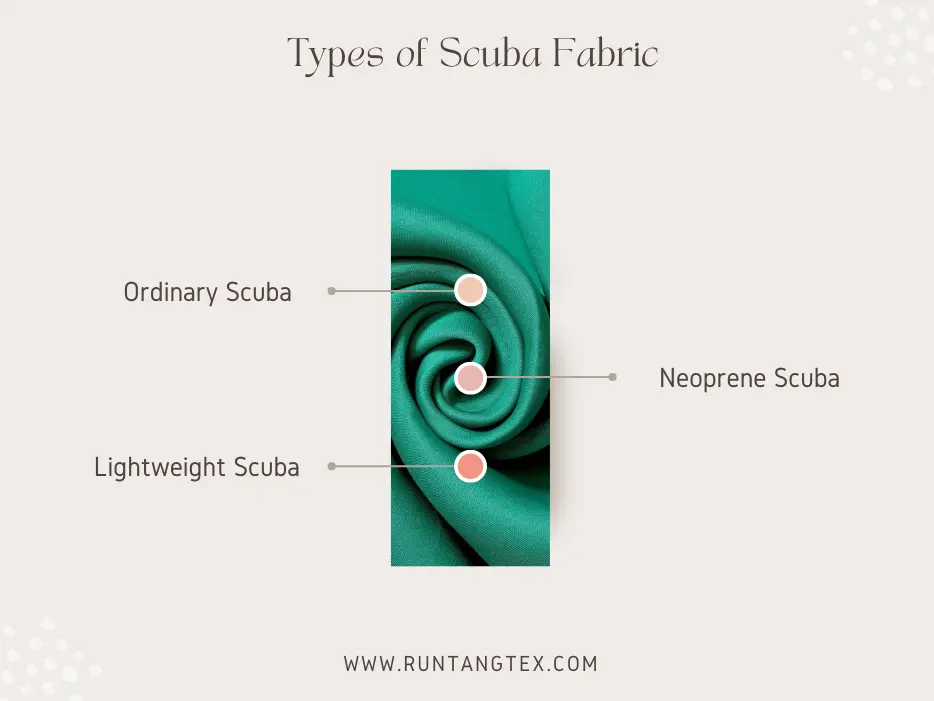
2. Neoprene Scuba: Neoprene, which was first created for wetsuits, is a heavier type of scuba fabric. It is appropriate for swimwear, coats, and cold-weather apparel since it provides superior thermal insulation and is water-resistant. Neoprene scuba fabric is a popular option for fashion pieces that need a more rigid silhouette since it offers more structure but is less flexible than regular scuba.
3. Lightweight Scuba: Compared to regular scuba, this kind of fabric is lighter and thinner, which makes it perfect for warmer climates and less heavy clothing. Lightweight scuba is more breathable while retaining some of the same qualities, like flexibility and moisture-wicking. It is frequently utilized in summer dresses, sportswear, and casual attire.
| Fabric Name | Scuba Fabric |
| Fabric Materials | Polyester and Spandex Blend |
| Fabric Breathability | Gemiddeld |
| Fabric Durability | Hoog |
| Water Retention Ability | Laag |
| Fabric GSM | 200 to 300 GSM |
| Prone to Bubbling | Laag |
| Washing Temperature | Medium setting |
| Fabric Shine | Subtle |
| Applied for | Activewear, Costumes, and Accessories |
Because of strength, flexibility, and visual appeal, scuba fabric has gained popularity in a variety of applications.

The following are some noteworthy uses for scuba fabric:
Scuba fabric is well-designed to use in wetsuits. The fabric has evolved into versatility in terms of various sectors. Besides, the unique properties of Scuba fabric are:
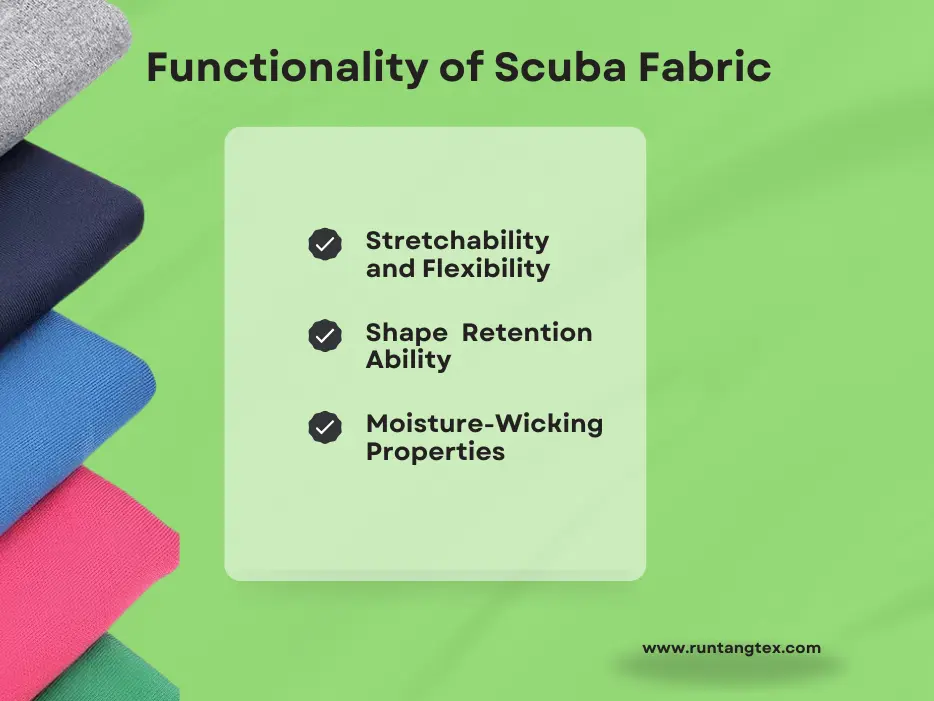
The weave and fiber composition also contribute to the garment's moisture-wicking capabilities. These features keep the wearer dry, particularly during intense activity. Scuba fabric is also very resistant to fading and pilling. These particular features make it a durable option for clothing and accessories.
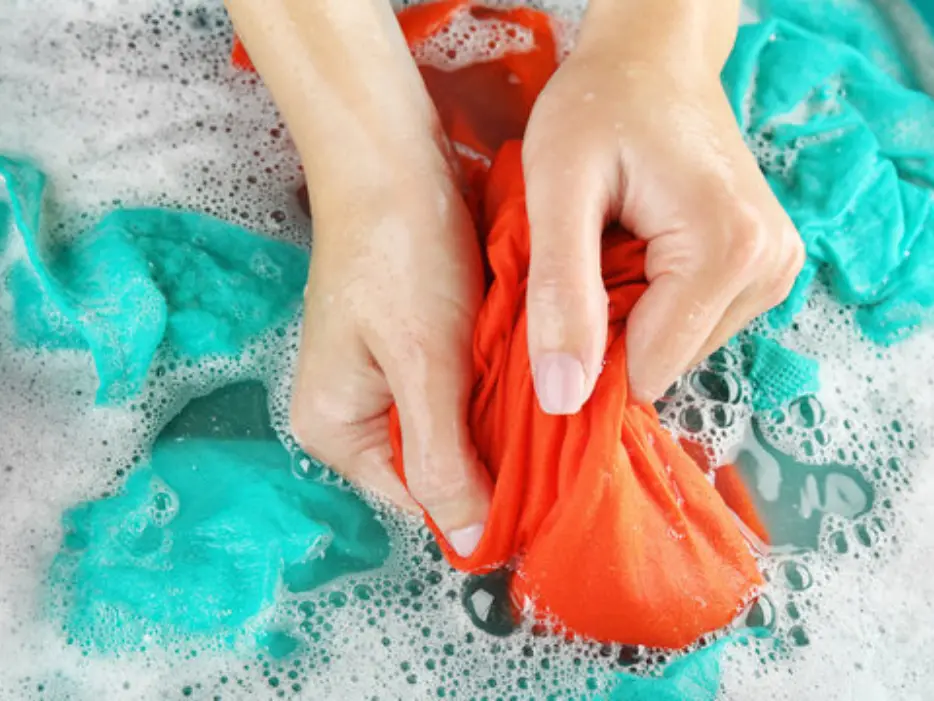
The functionality of scuba fabric also depends on how well you take care of the garment. Taking care of scuba fabric is similar to other fabrics.
Here is the entire description given below:
Whether you're searching for dependable athletic wear, stylish fashion pieces, or long-lasting accessories, scuba fabric has always been a versatile option. This fabric provides an excellent balance of durability and style. Its elasticity and moisture-wicking properties make it excellent for activewear.
The structured look and shape retention make it popular in both high-fashion and daily clothes. The fabric's wrinkle resistance and ease of maintenance contribute to its attractiveness, making it a popular option among designers and consumers. Scuba fabric demonstrates the ability of new materials to blend functionality and elegance, genuinely allowing users to "move with freedom" in every sense.
 Stoffengids
Denier nylon voor sportbreisels: specificaties 30D / 40D / 70D kiezen
LEES MEER Stof
Piquéstof: gestikte stof met gewafelde textuur voor sportkleding
LEES MEER Branche-inzichten
De dubbele gebreide stof versus de enkele jersey gebreide stof
LEES MEER Technische knowhow
Een ontdekkingstocht door de wereld van dubbelgebreide stoffen: een uitgebreide gids
LEES MEER Technische knowhow
Soorten vezels in jersey breistof
LEES MEER