2009年創業のニット生地メーカー · 中国
2009年創業のニット生地メーカー · 中国

Custom knit fabric development slows when briefs leave fiber direction, GSM range, structure, or color tolerance open. A clearer brief reduces avoidable sample rounds and gives the factory measurable targets before yarn sourcing, knitting, finishing, and lab dip approval begin. At Runtang Tex, this custom knit fabric development capability is supported by knitted fabric R&D, sampling, and bulk production workflows across 20+ knit fabric categories and 4,000+ developed styles.
A development brief is the single document the factory uses to make all upstream decisions: yarn sourcing direction, machine selection, and stitch configuration. A brief that omits key parameters doesn't get flagged — it gets interpreted. Understanding what a complete brief contains is the first step toward reducing revision cycles.
The minimum fields a brief should address:
What happens when these fields are missing: the factory defaults to its most common construction for that fabric category. That default may be efficient for the factory but misaligned with the brand's end-use. The sample arrives, the buyer rejects it, and the revision request has to reconstruct the specification retroactively, which is slower than getting it right at a brief stage.
Once the brief is received, the factory first confirms yarn direction, construction route, machine suitability, and finishing requirements. These decisions are usually made before trial knitting, so late changes to GSM, fiber, or pattern repeat may reset sourcing and setup. A first greige trial is then checked for stitch density, weight direction, and structural stability before dyeing, printing, or finishing, depending on the process. For jacquard knit fabric, pattern repeat and yarn setup add extra checkpoints; separate jacquard pattern development should be scoped before the sample timeline is confirmed. Lab dip or panel dip approval is the first buyer-side checkpoint before a finished sample is cut and shipped.
At Runtang Tex, custom knit fabric development is handled through knitted fabric R&D, sampling, and bulk production workflows across 20+ knit fabric categories and 4,000+ developed styles.
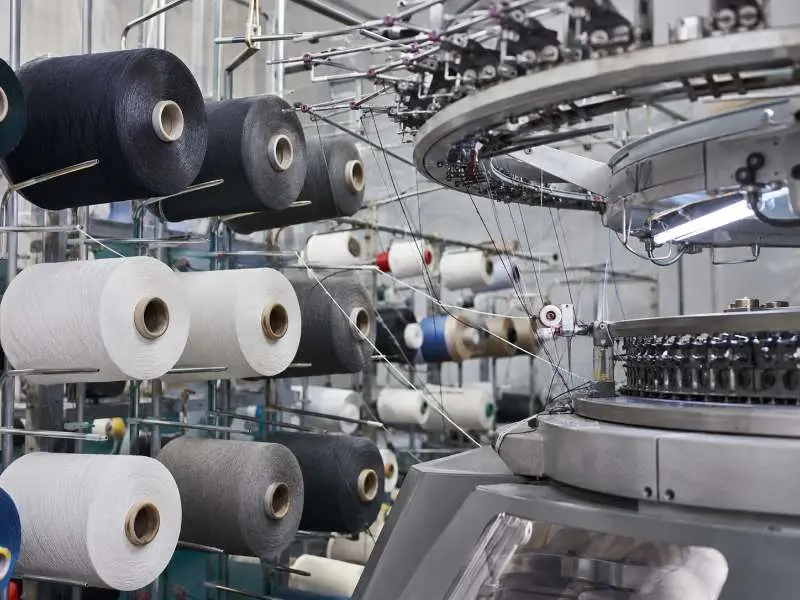
The sample review is the step most likely to generate a vague revision request. When buyers evaluate samples through a consumer lens — "it doesn't feel right" or "the color is off" — the feedback doesn't translate cleanly into a factory instruction. Structuring the review around measurable parameters produces revision requests that the factory can act on without further clarification.
The review should cover the following dimensions:
Approval should be documented with specific pass/fail criteria against each of the above dimensions. A signed approval referencing the sample's development round number creates a clear benchmark for bulk production.
Each revision round adds more than knitting time. It also includes buyer review, feedback translation, dyeing or finishing changes, and shipping. The most avoidable revisions usually come from unclear brief inputs: a single-number GSM target, no physical hand-feel reference, lab dip approval on a different substrate, or a visual reference without fiber content and GSM data. In the revision note, separate measurable issues from preference issues. Use numbers for GSM and shrinkage, identify the approved lab dip or panel dip, and include the sample round number. For custom solid-color development, MOQ starts at 200 kg per color. For new structures, pattern work, or proprietary specifications, the development MOQ and sample scope should be confirmed at a brief stage.
For custom solid-color development, the minimum order starts at 200 kg per color. New stitch structures, jacquard pattern development, or proprietary blend specifications may require a separate development MOQ confirmed at brief submission. Sample fees, sample yardage, and bulk MOQ should be confirmed separately before the first development round.
Multiple constructions can be submitted as separate briefs within a single development round, but each construction is treated as an independent development item with its own timeline. Combining briefs doesn't compress the timeline — each construction goes through yarn sourcing, knitting, and finishing independently. Submitting complete briefs for all constructions at the same time is the most efficient approach, as it allows the factory to source yarn in parallel rather than sequentially.
Runtang Tex develops custom knit fabrics for apparel brands across Europe, North America, and Australia — from brief to approved sample. Request a sample or get a quote to begin custom knit fabric development.