2009年創業のニット生地メーカー · 中国
2009年創業のニット生地メーカー · 中国

Key Sourcing Takeaways
Circular knit and flat knit are not interchangeable terms for "knitted fabric." They describe two distinct production systems with different output logic, fabric dimensions, and cost structures. Sourcing teams that conflate the two often encounter spec mismatches or sampling delays that could have been avoided before the first purchase order was placed.
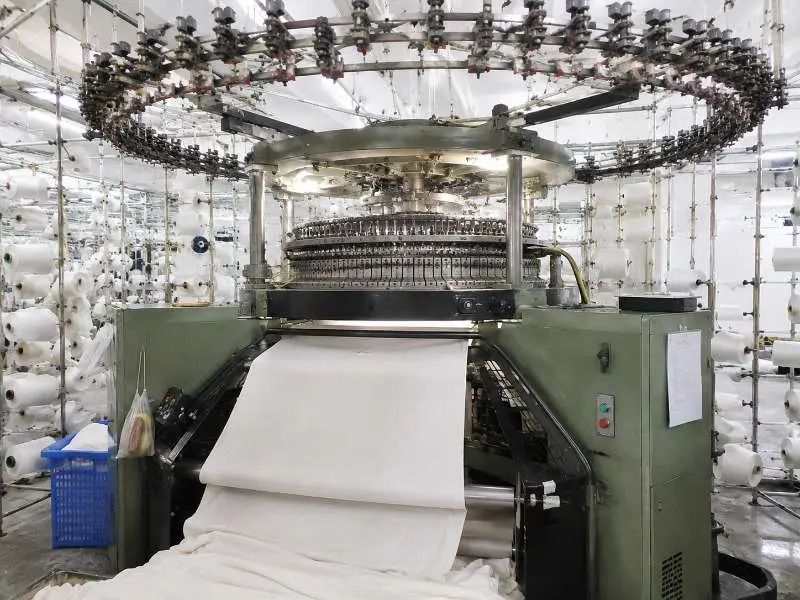
Circular knitting machines operate on a rotating cylinder of needles, producing fabric in a continuous spiral. The output is a seamless tube, which can be used in tubular form or slit open to a flat width depending on the end use. This continuous-loop process is optimised for speed: machines can run with minimal interruption across long production shifts.
The fabric types most commonly produced on circular machines include single jersey, interlock, rib, and piqué. These are the structural foundations for core casualwear, underwear, activewear, and layering programmes. Because needle count and machine diameter remain fixed during a run, output is highly consistent across large yardages — a key requirement for bulk colour programmes where shade variation needs to be controlled.
For sourcing teams, the circular knit model aligns best with high-volume, repeatable SKUs. Long production runs reduce setup costs per kilogram, and the continuous output means lead times can be tighter when capacity is committed. The trade-off is design flexibility: circular machines are optimised for consistent stitch structures, not for the kind of three-dimensional shaping or pattern complexity that requires needle-by-needle control.
One practical consideration when specifying circular knit fabric is edge behaviour. Because the fabric is formed as a tube, the cut edges can carry a curl tendency depending on the fibre content and fabric weight. This is a standard variable in cut-and-sew operations, and should be factored into cutting allowance calculations when reviewing fabric specifications.
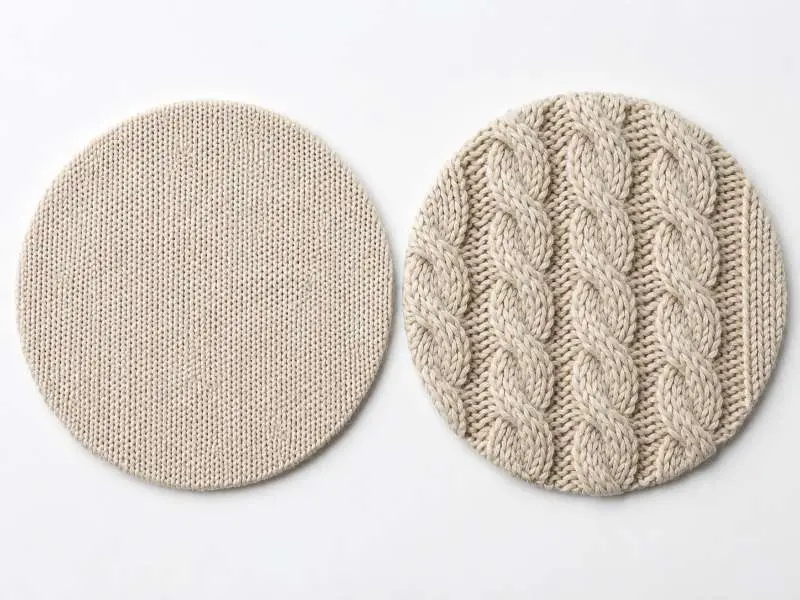
Flat knitting machines move a carriage back and forth across a horizontal needle bed, building fabric row by row in a flat sheet. Because each needle can be individually controlled during the pass, the machine can increase or decrease stitch count per row, transfer loops between needle positions, and switch between stitch structures within a single panel.
This needle-level control makes flat knitting better suited for shaped panels, cable relief, intarsia placement, and structured knitwear parts where stitch count changes within the panel. Circular knitting can still support repeat-based structures and some pattern development, but it is usually less efficient when the brief requires panel-level shaping or raised cable definition.
The flat knitting process is slower by design. What it trades in speed, it returns in construction specificity. For sourcing teams developing structured or design-led styles, this is not a disadvantage — it is the correct tool for the requirement. Sampling on flat machines also tends to involve shorter minimum sample lengths, which can make design iteration more manageable during development cycles. For complex flat-knit structures, digital sample review can also reduce communication gaps before physical sampling; SHIMA SEIKI’s virtual sampling system shows how flat knitting data can connect design review with machine production planning.
Flat knit output arrives as a pre-dimensioned flat panel. There is no tubular handling step, and edge curl is less of a factor. Width, however, is determined by the number of active needles and the machine's working width, which means specifying panel dimensions requires accurate needle count information at the brief stage.
When you compare circular knit vs flat knit across a sourcing brief, the differences that matter most are not aesthetic — they are operational. Below is a summary of the key production variables that affect order planning, costing, and supplier conversations.
| Dimension | Circular Knit | Flat Knit |
|---|---|---|
| Production method | Continuous tubular knitting | Back-and-forth, flat panels |
| Typical fabric types | Jersey, interlock, rib, piqué | Cable knit, structured rib, jacquard panels |
| Production speed | High — suited to volume runs | Lower — design complexity priority |
| Fabric width output | Tubular (opened or used as tube) | Pre-determined flat width |
| Stitch complexity | Consistent, repeat-based structures | Variable — shaped knitting, intarsia, transfer |
| Cutting waste tendency | Edge curl requires allowance | Lower edge distortion on flat output |
| MOQ behaviour | More efficient when volume justifies machine setup | Project MOQ depends on panel complexity, yarn, and development route |
| Best order type | Basics, core programmes, high-volume SKUs | Structured styles, sample development, fashion |
MOQ behaviour: Circular knit production usually becomes more cost-efficient when setup time is spread across longer yardage or kilogram runs. Flat knit MOQ is more project-specific because panel complexity, yarn selection, and programming time can change the development cost. For Runtang orders, stock fabrics start from 1 roll (~23 kg) per colour, custom solid colors start from 200 kg per color, and general custom development starts from 1,000 kg; confirm the applicable MOQ during sampling because cable knit and shaped-panel projects may follow different requirements.
Gauge as the connecting variable: Both machine types use gauge (needles per inch) as a core specification parameter, but gauge ranges differ between them. Understanding gauge selection — and how it affects hand feel, stitch density, and production speed — is a prerequisite for writing accurate technical briefs for either machine type. A deeper explanation of gauge across machine types is covered in 編機のゲージ:風合い、編み目密度、生産速度をどう決めるか.
Cutting waste allowance: Circular knit fabric, particularly single jersey, can exhibit a roll tendency at cut edges due to the loop structure's tension balance. This is a normal characteristic and should be included in cutting efficiency calculations. Flat knit panels are less prone to this behaviour, though selvedge allowances still apply depending on construction.
The most efficient way to avoid machine-type mismatches is to build the distinction into your fabric brief from the start. Suppliers working at the factory level think in machine configurations, not generic categories — a brief that specifies the fabric structure and end-use application gives a clear enough signal to confirm machine suitability before sampling begins.
Here are three practical indicators that help identify which production system your requirement maps to:
Runtang’s core production strength is in circular knit structures, including single jersey, interlock, rib, and piqué across multiple fibre compositions. For cable knit fabric and other flat-knit-style structures, the development route should be confirmed at the brief stage, including machine type, panel dimensions, yarn choice, and whether production is handled in-house or through a coordinated partner facility. Clarifying this early prevents specification drift between sampling and bulk.
When reviewing supplier capability for a mixed-machine range, confirm whether the supplier operates both machine types in-house or coordinates flat knit development through a partner facility. This affects both sampling timelines and the degree of direct quality control at the bulk production stage.
Circular knit is the production system aligned with high-volume basics. Its continuous output, consistent stitch structure, and efficient setup amortisation across long runs make it the standard choice for jersey, interlock, rib, and piqué programmes. Flat knit production is slower and better matched to design-intensive styles where construction complexity is the primary brief requirement, not volume efficiency.
Yes, though confirm the supplier's direct production scope versus external coordination for each machine type. Some fabric mills operate both circular and flat knitting equipment in-house; others specialise in one system and manage the other through partner facilities. Sourcing both from a single point of contact is practical for range management, but it's worth understanding where each fabric type is actually produced before committing to bulk.
Runtang Tex produces circular knit jersey, interlock, rib and related knitted fabrics for apparel brands across Europe, North America and Australia. For cable knit or flat-knit-style requirements, contact us to confirm the development route and request samples.


