Nhà sản xuất vải dệt kim từ năm 2009 · Trung Quốc
Nhà sản xuất vải dệt kim từ năm 2009 · Trung Quốc

For hoodie bulk production, fleece fabric problems often appear after sampling approval: the fabric feels heavier or lighter than expected, the brushed side pills after washing, or the finished hoodie does not match the target warmth and structure. These issues usually come from specs that were not clearly confirmed before production. This guide explains how to evaluate fleece knit fabric by GSM range, brushing depth, pilling test reference, fiber blend, and certification options before confirming a bulk order.
GSM is the primary specification variable when sourcing fleece for hoodies. The ranges below reflect common ordering patterns across casualwear and streetwear production — they are reference points, not fixed standards. Exact GSM per SKU should be confirmed based on your fiber composition, construction, and wash shrinkage targets.
| GSM Range | Hoodie Category | Primary Sourcing Context |
|---|---|---|
| 200–260 GSM | Lightweight / layering | Spring/fall transitional, athleisure shells, mid-layer fleece |
| 280–320 GSM | Everyday midweight | Casual streetwear, branded basics, year-round collections |
| 340–400 GSM | Heavyweight | Winter collections, premium structured hoodies |
| 400+ GSM | Specialty heavyweight | Outerwear-adjacent, high-GSM streetwear positioning |
Note: Brushed fleece may feel heavier than its stated GSM due to the raised pile. Always request a pre-production fabric swatch at your target GSM before finalizing bulk specs.
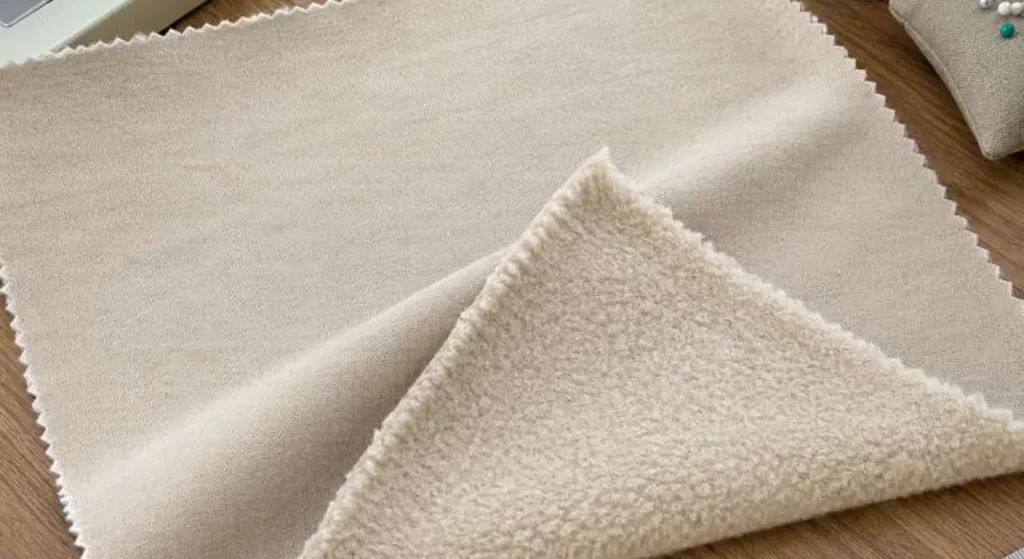
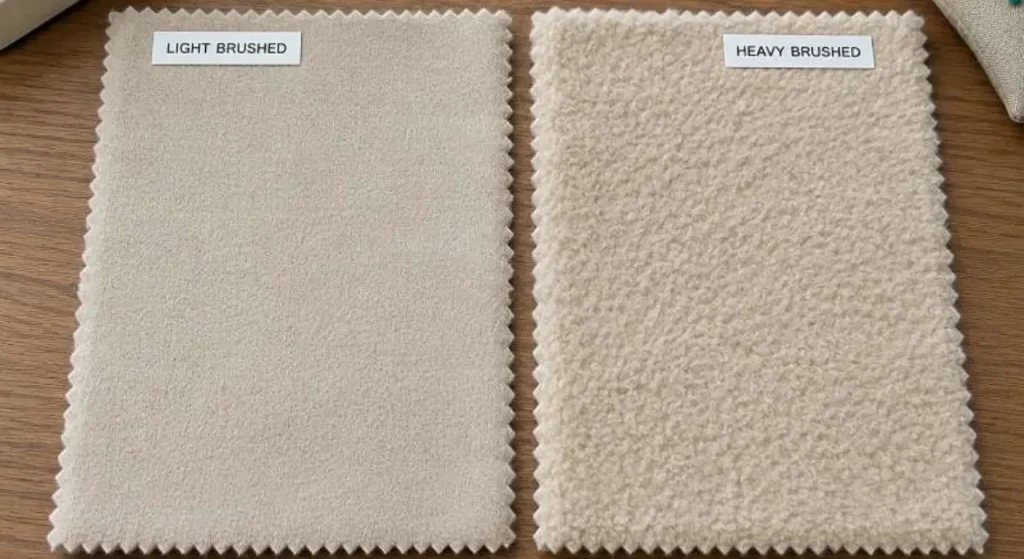
Brushing is a finishing process in which the fabric surface is mechanically raised to create the soft inner pile characteristic of fleece hoodies. The depth of brushing — and the number of passes applied — directly influences how much fiber is lifted from the yarn structure. More aggressive brushing can produce a softer initial hand feel, but may also release more loose fiber ends during early wash cycles, increasing surface pilling risk over the garment's lifespan.
In bulk production, this relationship can be compounded by variation between dye lots and finishing runs. Before sampling, confirm the following with your fabric mill:
Some sourcing teams default to brushed fleece for all hoodie production, when the actual end-use spec — breathability requirement, seasonal market, or target pilling tolerance — would be better served by French terry knitted fabric. The distinction isn't about quality hierarchy; it is about matching construction to application.
| Đặc điểm | Dệt kim fleece | French Terry |
|---|---|---|
| GSM range | 200–420+ GSM | 180–380 GSM |
| Interior structure | Brushed, raised pile | Looped, unbrushed |
| Pilling tendency | More sensitive to brushing depth, loose fiber release, and anti-pilling finish | Usually lower brushing-related pilling risk because the looped back is not raised, but still depends on yarn, fiber blend, and finishing |
| Độ thoáng khí | Trung bình | Cao hơn |
| Best application | Cold-weather hoodies, structured streetwear | Transitional wear, athleisure, year-round collections |
| MOQ (custom, per color) | 200 kg | 200 kg |
A 300 GSM brushed fleece and a 280 GSM French terry serve different market positions and carry different quality-control priorities at the production stage. If your development brief specifies moderate warmth, year-round use, or activewear crossover, confirm whether your GSM and pilling requirements are better met by French terry before committing to a fleece build.
For brands with recycled-content sourcing requirements, Global Recycled Standard (GRS) certified fleece is an available option. GRS supports recycled-content programs by verifying recycled raw materials through the supply chain and adding processing requirements related to chemical, social, and environmental criteria. Runtang Tex holds GRS certification, but available fleece constructions, recycled content, color options, and MOQ should still be confirmed before sampling.
If you are evaluating polar fleece fabric for outerwear-adjacent hoodie applications where anti-pilling performance is the primary spec driver, confirm the anti-pill grade and applicable test standard before sampling, as these differ between constructions.
Composition note: Common hoodie fleece builds include cotton-rich blends for a softer hand feel, polyester-rich blends for better shape retention and faster drying, and recycled polyester blends for GRS-related sourcing programs. For brushed fleece, do not judge composition alone. Ask the mill to confirm fiber blend, yarn quality, brushing depth, anti-pilling finish, shrinkage target, and pilling test result as one combined specification package.
For standard documentation, refer to Textile Exchange: Recycled Claim Standard (RCS) + Global Recycled Standard (GRS)
For everyday casual hoodies — branded basics and streetwear staples — a range of 280–320 GSM in a cotton/polyester blend is a commonly used starting point. The exact GSM should be confirmed based on your construction, fiber targets, and wash shrinkage allowance. Request a pre-production swatch at your target GSM before finalizing the bulk spec.
Yes. Runtang Tex supplies Global Recycled Standard (GRS) certified fleece options for brands with recycled-content sourcing requirements. GRS certification applies chain-of-custody verification across fiber sourcing and production. For custom solid-color development, MOQ usually starts from 200 kg per color, while exact requirements depend on yarn, recycled content, color, GSM, and finishing. Contact us to confirm whether your target fleece construction can be developed under a GRS-certified supply.
 Vải
Vải dệt kim nhân tạo: Mọi điều bạn cần biết
ĐỌC THÊM Kiến thức kỹ thuật
Khám phá thế giới vải dệt kim đôi: Hướng dẫn toàn diện
ĐỌC THÊM Vải
Kiến thức cơ bản về vải purl knit: Đặc điểm, ứng dụng và gợi ý phối đồ
ĐỌC THÊM Vải
Vải dệt kim slub là gì? Tất tần tật về kết cấu độc đáo của nó
ĐỌC THÊM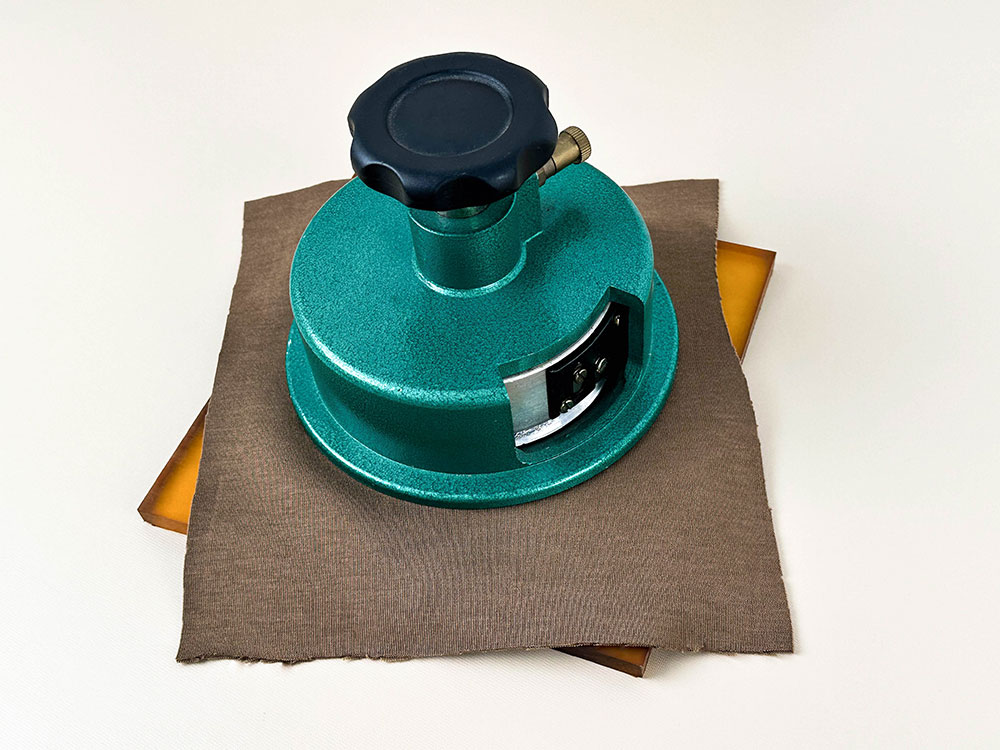 Vải
Định lượng vải: Hướng dẫn lựa chọn chất liệu
ĐỌC THÊM