Producent dzianin od 2009 · Chiny
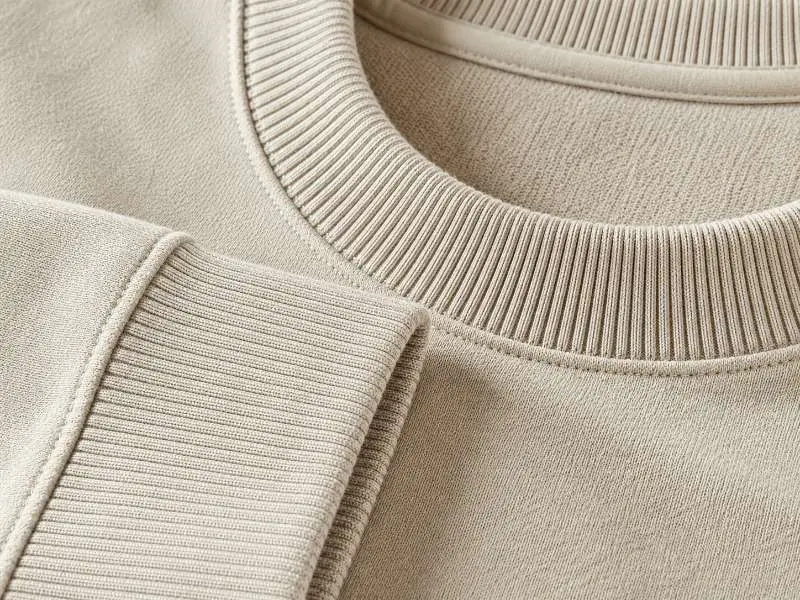
Producent dzianin od 2009 · Chiny

Rib knit fabric is widely used for cuffs, neckbands, waistbands, and fitted bodywear because of its crosswise stretch and close-fitting structure. For apparel brands sourcing rib knit fabric in bulk, the main risk is not only hand feel or stretch ratio at the sample stage, but whether the fabric keeps its dimensions and recovery after washing and repeated wear. Shrinkage in the wrong direction—or recovery loss that builds up over repeated wash cycles—can cause trim mismatch, garment returns, and resampling delays. The following checks help buyers evaluate rib knit samples before bulk approval.
When exposed to heat, moisture, and mechanical washing, rib knit fabric can show different shrinkage behavior in the lengthwise and widthwise directions. The result depends on yarn type, rib structure, finishing, and whether elastane is included. For trim components, that directional difference matters: a neckband or cuff may still stretch across the width, but if its length changes after washing, it may no longer sit cleanly against the main garment panel. Compared with single jersey, rib knit fabric usually needs closer shrinkage and recovery checks when used as cuffs, neckbands, or other trim components.
The fiber combination in a rib knit construction has a direct effect on both shrinkage tolerance and long-term elastic recovery. The table below outlines typical tendencies by composition. Actual performance depends on yarn quality, finishing parameters, and rib structure, and should always be confirmed through sampling before bulk approval.
| Skład | Lengthwise Shrinkage | Recovery Behavior | Typical Application |
|---|---|---|---|
| 100% Cotton | Higher, influenced by yarn twist and finishing process | Mechanical recovery from rib structure; weaker rebound than elastane blends | Sweater ribbing, casual necklines |
| Cotton + Spandex | More controlled, depending on spandex % and heat-setting conditions | Elastic; spandex content directly affects rebound stability | Cuffs, waistbands, fitted bodywear |
| Polyester + Spandex | Generally lower | Strong elastic recovery; good dimensional stability after repeated washing | Performance trims, activewear components |
| Acrylic or Wool Blend | Moderate; affected by blend ratio and wash temperature | Recovery may degrade with high-heat washing cycles | Knitwear components, sweater ribbing |
One flag worth checking at the sample stage: in spandex-blended rib knits, the elastane content affects how the fabric responds to heat-setting during finishing. A higher spandex percentage can improve long-term rebound—but only if finishing temperatures are appropriate for the fiber mix. Request the actual spandex percentage on the composition certificate, not just the fiber label, before approving bulk.
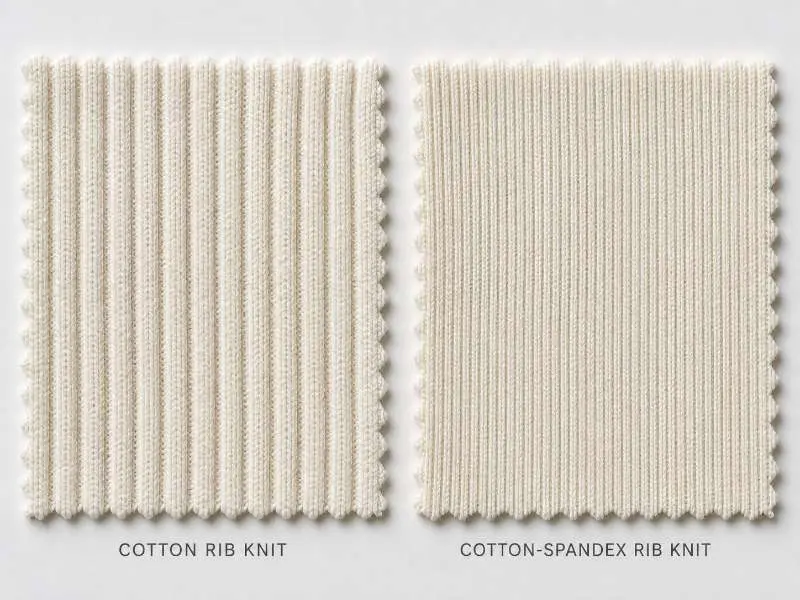
We manufacture rib knit fabric from 200 to 450 GSM, covering lightweight neckband ribbing through heavier bodywear constructions. GSM influences dimensional stability beyond weight: denser rib constructions can hold their shape more consistently after washing, while lighter constructions—typically 200–260 GSM, often used for trim applications—may be more sensitive to lengthwise contraction.
For trim-specific applications, the GSM relationship between the rib component and the main body fabric is worth verifying at the sample stage. A significant GSM differential between the two can result in uneven washing behavior in the finished garment, particularly at hem and sleeve openings. Requesting a wash test on both fabrics together—rather than each in isolation—can help identify this early.
The following three verifications should be planned during the sample stage, before bulk approval.
There is no universal tolerance because rib trim shrinkage depends on garment construction, wash specification, fiber content, and the shrinkage behavior of the main body fabric. At the sampling stage, test the rib trim and body fabric under the same wash and drying conditions, then compare the lengthwise and widthwise dimensional change. The key is not only the rib trim’s own shrinkage rate, but whether the difference between trim and body fabric stays within your pattern allowance. If lot-to-lot consistency is a concern, request shrinkage data from at least two production samples across different dye batches.
Global Recycled Standard (GRS) certification governs the source verification and chain of custody of recycled fiber content—it does not set dimensional performance specifications. Rib knit produced from GRS-certified recycled polyester or recycled cotton may perform comparably to conventional fiber versions in shrinkage and recovery, but this should be confirmed through sampling rather than assumed. Recycled yarn characteristics can vary by source lot, so dimensional testing remains relevant regardless of certification status.
If you are still comparing rib knit with other knitted structures, explore our full knit fabric range before confirming your sample direction.
Send us your rib knit composition requirement, target GSM range, and end-use application—our team will recommend a suitable rib structure and arrange samples for your evaluation. Request a sample or get a quote through our contact page.
 Przewodnik po dzianinach
Dzianina welurowa: kierunek włosia, specyfikacja kroju i spójność koloru w produkcji seryjnej
CZYTAJ WIĘCEJ Wiedza branżowa
Co można zrobić z bawełnianej tkaniny dżersejowej
CZYTAJ WIĘCEJ Przewodnik po zaopatrzeniu
Jakie materiały powinny właściwie zamawiać marki odzieży plażowej — i dlaczego struktura dzianiny zmienia wszystko
CZYTAJ WIĘCEJ Dzianina
Zasady pielęgnacji dzianin: wskazówki dotyczące prania i konserwacji dla trwałej odzieży
CZYTAJ WIĘCEJ Dzianina
 piqué: idealny wybór na oddychającą i stylową odzież sportową
CZYTAJ WIĘCEJ