Knit Fabric Manufacturer Since 2009 · China
Knit Fabric Manufacturer Since 2009 · China

Key Sourcing Takeaways
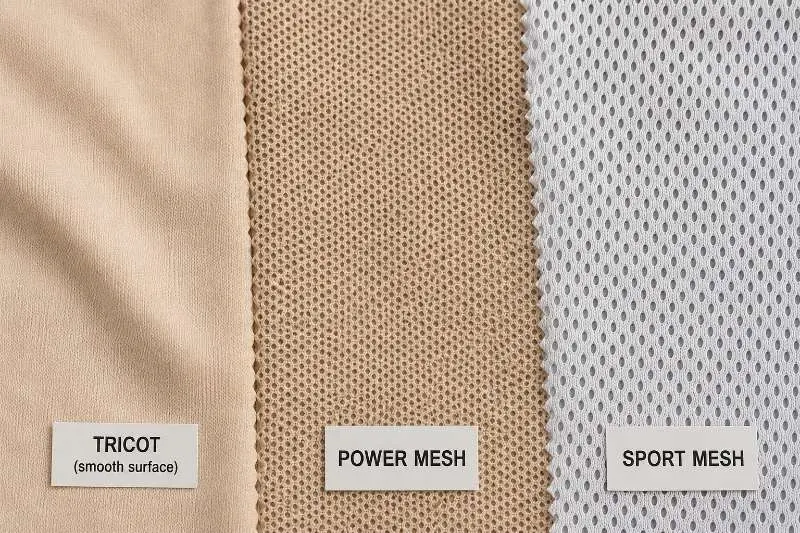
Choosing the best fabric for lining knit outerwear is a structural decision, not a comfort add-on. Tricot, power mesh and sport mesh each solve a different sourcing problem: stable coverage, ventilation, or zoned weight reduction.
| Lining Option | Best Use in Knit Outerwear | Main Advantage | Main Risk to Verify |
|---|---|---|---|
| Tricot | Structured body lining and stable shell styles | Smooth face, directional stretch, better coverage | Stretch direction and shell compatibility |
| Power mesh | Ventilation-priority active shells | Four-way stretch and airflow | Coverage, seam visibility, recovery |
| Sport mesh | Zoned panels and lightweight constructions | Lower weight and higher airflow | GSM gap, seam distortion, interior finish |
Woven linings such as taffeta, Bemberg and acetate work for rigid shells because they provide slip and drape. Knit outerwear needs a lining that moves with the shell; otherwise, seam tension, drag lines, or restricted movement can appear during fitting and wear.
For athletic shells, zip-throughs and bonded knit jackets, the lining should be tested with the shell for stretch direction and recovery before bulk approval. This is why tricot, power mesh and sport mesh should be compared as construction choices, not as interchangeable lining fabrics.
Tricot is a warp-knit fabric — the yarns loop in a diagonal zig-zag along the fabric length rather than in the circular rows typical of weft-knit constructions. This produces a fabric with a smooth face, a subtly ribbed reverse, and a stretch bias that runs primarily across the width rather than the length.
For lining purposes, tricot is useful because most knit outerwear needs width-direction ease across the body and sleeves, while excess length stretch can cause bunching at hems or cuffs. GSM selection should be confirmed against shell weight during sampling. Custom solid colour tricot lining typically starts at 200 kg per colour, while stock colour options may be available from 1 roll (~23 kg) per colour depending on current inventory.
Runtang's tricot lining fabric range covers multiple construction weights, with custom colour and finish options for brands working within a defined technical specification.
Brands developing tricot-lined sportswear styles can also reference tricot lining fabric for sportswear for construction and application details specific to performance outerwear.
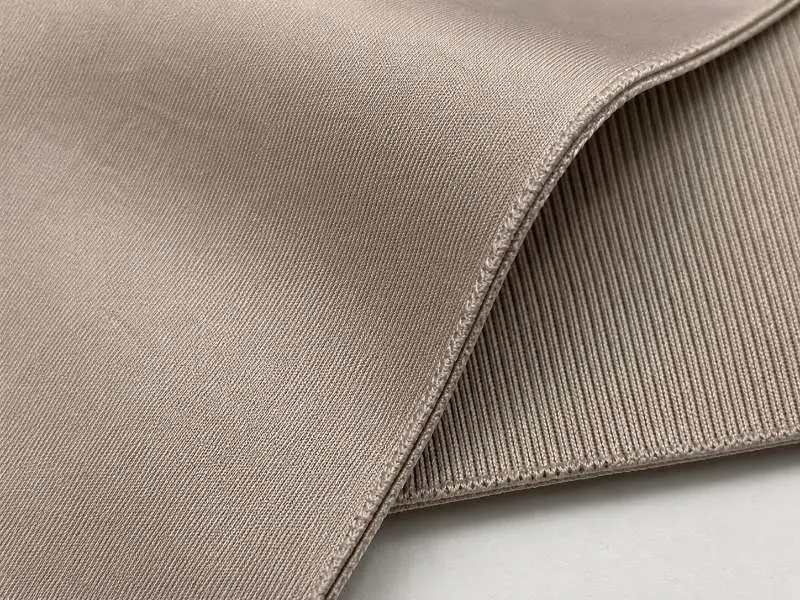
Power mesh is an open-knit construction — typically nylon or nylon-spandex — with a visible hole structure that allows direct airflow through the fabric layer. Unlike tricot, it offers four-way stretch, making it compatible with shells that require both width and length extension. It is most useful when airflow matters more than opacity or interior coverage.
The structural trade-off is coverage. Power mesh is semi-sheer — the open weave structure means the outer shell is partially visible through the lining layer, and interior seam finishing becomes more visible to the wearer. For athleisure styles where the interior is never seen, this is a non-issue. For premium constructions where interior finish is part of the quality proposition, brands typically specify a closed lining at panel edges and reserve mesh for body panels only.
From a sourcing standpoint, power mesh for lining applications should be reviewed by hole size, GSM, stretch direction, and fiber blend. Polyester-based mesh may support more cost-sensitive programs, while nylon-spandex options are often selected when recovery and seam-area durability are priorities. Confirm abrasion and recovery data during sampling instead of assuming performance from fiber alone.
Runtang's range of knitted mesh fabric includes constructions suitable for lining layer applications, with technical specifications available for brand review during the sampling stage.
Sport mesh is different from power mesh because it usually uses a larger, more structured hole pattern and a lighter overall construction. It is useful for zoned lining strategies, such as pairing tricot in front body panels for coverage with sport mesh in side or underarm panels for ventilation. The material switch at panel seams requires GSM and tension review to avoid distortion.
Nylon-based sport mesh can be considered when recovery, abrasion resistance, or cleaner seam handling is a priority, but the result depends on yarn, hole size, finishing, and cutting method. Polyester sport mesh may be more suitable for cost-sensitive lining zones or stock-colour programs. Confirm edge behaviour, seam stability, and colour availability during sample review.
For brands exploring nylon constructions in lining and performance panel applications, Runtang's nylon fabric range provides a starting reference for fiber composition and available construction weights.
The lining decision for knit outerwear is not finalised at the swatch stage. The following verification steps apply regardless of which of the three fabric types is being sourced:
Lining fabric verification is most efficiently handled during the sampling stage, before bulk quantities are committed. Build lining verification into the sampling brief rather than treating it as a post-approval task.
You can use the same tricot construction across styles with similar shell weights and stretch requirements, which simplifies procurement and colour management. The risk is in styles with significantly different shell weights — a lining that performs well in a mid-weight bonded shell may create drag or insufficient recovery in a lightweight single-layer knit shell. Review each style's shell spec separately and only consolidate lining specifications where shell weights fall within a comparable range.
For custom solid colour production, the MOQ for tricot and knitted mesh starts at 200 kg per colour. Stock colour options in standard constructions are available from 1 roll (~23 kg) per colour. For full custom development — including specific denier, construction weight, or surface finish — minimum quantities and lead times should be confirmed during the sampling enquiry stage.
The decision turns on the balance between coverage, stretch, and airflow for that panel's function. Power mesh offers more coverage with four-way stretch — appropriate for full-body panels in active shells. Sport mesh offers lower weight and higher airflow at the cost of coverage — appropriate for ventilation zones or packable jacket constructions where weight is a commercial specification. Request samples of both and evaluate against your shell and interior finish standards before finalising the spec.
Runtang Textile manufactures tricot, knitted mesh and nylon fabric for apparel brands across Europe, North America and Australia. Request a sample or get a quote to begin your lining fabric sourcing process.
 Technesch Know-How
Strécken Stoffer vs Woven Stoffer: A Comprehensive Comparison
READ MORE Sustainability
Hemp and Linen Fabric in Knit Apparel: Bulk Behavior, Certification, and What to Check Before Sampling
READ MORE Stoff
Rib Knit Fabric: The Reversible Textile with Excellent Stretch
READ MORE Sourcing Guide
Why Your Fabric for Sleepwear Keeps Failing After Bulk
READ MORE Fabric Guide
Mercerized Cotton Fabric for Premium Knit Apparel: Luster, Stability and Bulk Repeatability
READ MORE