2009年創業のニット生地メーカー · 中国
2009年創業のニット生地メーカー · 中国

Key Sourcing Takeaways
Both modal and bamboo get marketed as soft, sustainable cellulosic alternatives to cotton. But for sourcing teams building a knit line, the material question is not which feels better — it is which one can be verified. Certification traceability, labeling compliance, and batch-to-batch dyeing consistency behave very differently across these two fibers, and the gap matters before you approve a bulk order.
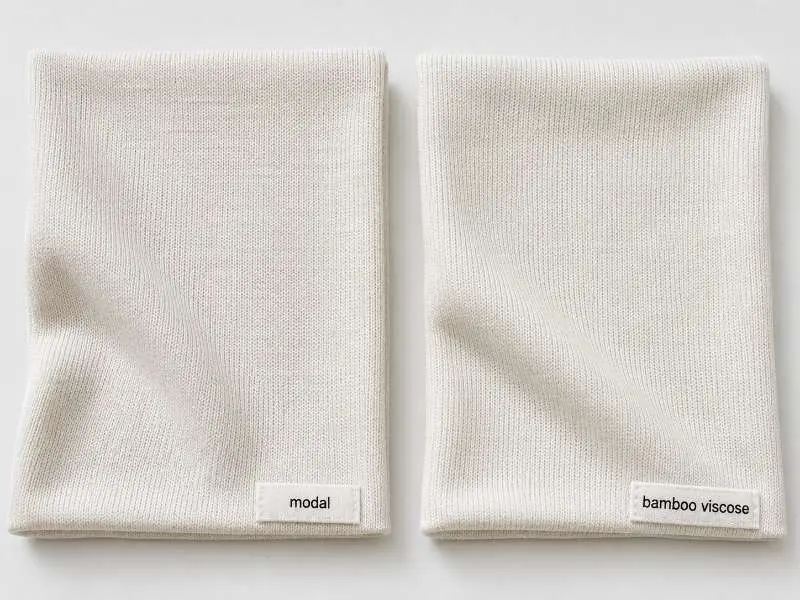
Modal and bamboo viscose share the same basic chemistry: both are regenerated cellulose fibers, dissolved from plant pulp and extruded into filament. Modal is produced from beech tree pulp, typically using a high wet modulus (HWM) variant of the viscose process that yields stronger, more stable fibers. Bamboo viscose is produced from bamboo pulp using standard viscose chemistry — the same industrial process used for conventional rayon.
That last point matters for sourcing. Despite bamboo's reputation as a natural, low-impact plant, the fabric derived from it undergoes significant chemical processing. The bamboo plant itself is fast-growing and requires minimal irrigation, but the conversion from pulp to fiber involves solvents that, depending on mill controls, can generate significant wastewater if not managed in a closed-loop system. The gap between bamboo's agricultural sustainability and the environmental profile of its fiber production is a known compliance risk for brands making green claims.
Modal can offer a more standardized processing story when it is sourced from a verified branded fiber producer. For example, Lenzing states that TENCEL™ Modal uses tracing technology and a resource-efficient production process with high chemical recovery rates. For non-branded modal, buyers should still request fiber origin documentation and avoid treating all modal as equally traceable. This consistency does not exist across bamboo viscose production, which is fragmented across many mills with varying process controls.
For sourcing teams: both fibers will feel similar in a jersey or interlock knit, and both are available across a broad GSM range depending on construction and finishing. The processing origin is relevant not because it changes the hand feel, but because it determines what claims you can legally make about the fabric — and what documentation your mill can actually provide.
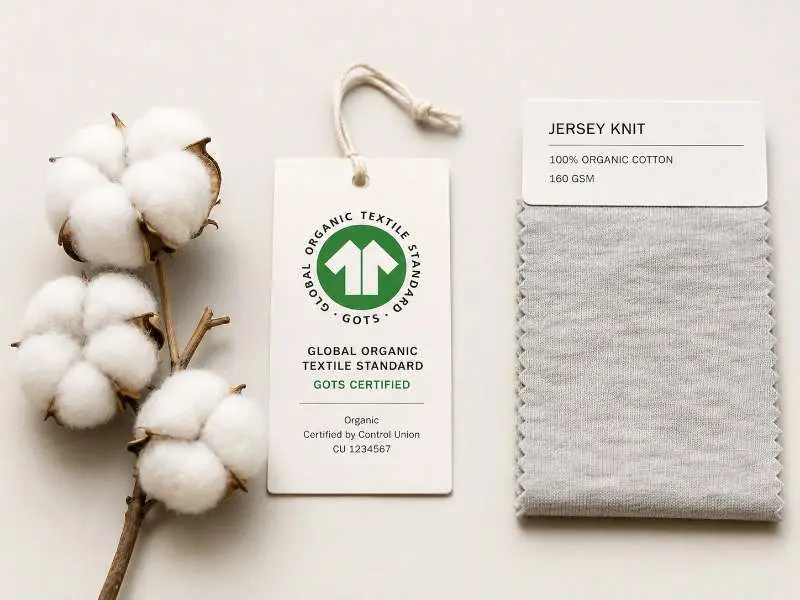
When sourcing modal knit fabric, the strongest documentation usually comes from branded fiber programs rather than generic modal claims. For TENCEL™ Modal, Lenzing provides traceability support through fiber identification technology and published certification information, including FSC® / PEFC sourcing and EU Ecolabel coverage for relevant fibers. If the supplier offers a generic modal, ask for the fiber producer's name, certificate scope, and available origin documents before using sustainability claims.
Bamboo viscose does not have an equivalent single-source certification framework. Certifications you will encounter on bamboo fabric include:
The result is a fragmented picture: a bamboo fabric can carry OEKO-TEX® Standard 100 and still have no verifiable documentation of its pulp sourcing or the environmental controls applied during chemical conversion. For brands sourcing into EU or North American markets with sustainability reporting requirements, this gap is a material compliance risk.
FTC labeling compliance (US market): The US Federal Trade Commission has consistently held that fabric made from bamboo via the viscose process must be labeled as "rayon" or "viscose made from bamboo" — not simply as "bamboo fabric." Brands that label bamboo viscose as bamboo have faced FTC enforcement action. If your knit line is sold in the US, this labeling distinction should be in your tech pack before sampling, not after production.
OEKO-TEX® Standard 100 certified options are available for both modal and bamboo viscose knit fabric. Please confirm certification requirements at the time of sampling.
In a knit production context, the practical sourcing risk of bamboo viscose versus modal often surfaces not at sampling, but during bulk dyeing.
In bulk dyeing, branded modal is generally easier for buyers to verify because the fiber source, certificate scope, and production route are clearer. This can reduce uncertainty when managing shade approval, GSM tolerance, and repeat orders. Bamboo viscose can also perform well, but results depend heavily on the mill’s pulp source, spinning control, dyeing process, and finishing route. For this reason, buyers should compare lab dips, bulk-lot shade records, and wash test data before treating a sample result as repeatable.
Key specs to verify at sampling (both fibers):
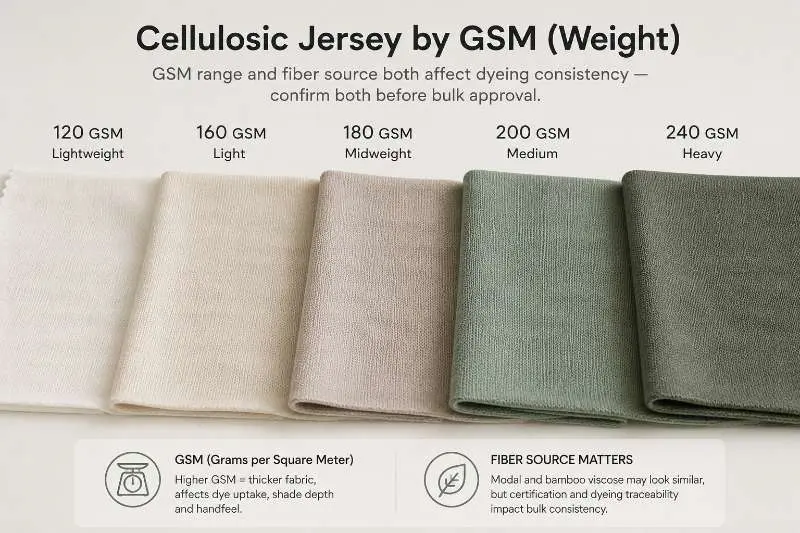
GSM ranges for both fibers in knit applications span broadly depending on construction — from lightweight single jersey to heavier interlock — and should be confirmed at the time of development, not assumed from fiber type alone.
Modal knit fabric is a reliable choice for product categories where color accuracy and wash durability across multiple seasons matter: base layers, fitted T-shirts, intimates, and lightweight interlock constructions. Its clearer fiber source and documentation can make color programs easier to manage across multiple SKUs. Modal also blends well with cotton and spandex, and these blends are common in interlock and jersey constructions used for everyday basics.
For buyers comparing modal with another branded cellulosic option, modal and lyocell knit sourcing covers lyocell (TENCEL™) as a third route for premium knit applications.
Bamboo viscose knit fabric is a viable option for brands where the bamboo origin story has marketing relevance — particularly for activewear, base layers, or underwear lines targeting consumers who identify with natural-fiber sourcing. The important caveat is that your marketing must align with regulatory reality: bamboo viscose is rayon, and any claims about natural antibacterial properties or inherent sustainability require third-party substantiation.
Bamboo viscose is often selected for warm-weather or active-use programs where buyers want a cooler hand feel and a plant-origin story. However, cooling or moisture-management claims should be verified through fabric testing and should not be treated as an automatic property of every bamboo viscose knit.
Blend considerations: A modal/bamboo viscose blend combines modal's color consistency and wash durability with bamboo's cooling and moisture-management characteristics. These blends are increasingly used in knit base layers and loungewear. If specifying a blend, define the fiber ratio clearly in your tech pack and request certification documentation for each fiber component separately.
For jersey knit fabric and interlock knit fabric applications, both modal and bamboo viscose can be constructed at comparable fabric weights and widths. The fiber choice is ultimately determined by your certification requirements, your target market's labeling rules, and the documentation your mill can provide.
Most sourcing errors with cellulosic knit fabric happen because certification and compliance questions are deferred until after sampling. By the time a bulk order is in production, requesting fiber origin documents or challenging labeling language is costly. The following checklist applies to both modal and bamboo viscose knit fabric and is most useful at the RFQ stage:
Fiber origin documentation
Labeling compliance
Bulk performance verification
Certification chain
For brands evaluating knit fabric options that include mercerized cotton knit fabric alongside cellulosic alternatives, the documentation requirements at sampling follow the same logic — fiber-specific certification, confirmed labeling, and bulk performance validation before production sign-off.
For branded modal claims, check Lenzing TENCEL™ fiber information and request supplier-side documentation before sampling. For a non-branded modal, ask for the fiber producer name, certificate scope, and available origin documents. A mill that cannot name the fiber source or provide a certificate number should be treated as an unverified claim at sampling.
In the US, the FTC states that textiles made from bamboo through a rayon or viscose process should be labeled as “rayon made from bamboo” or “viscose made from bamboo,” not simply “bamboo.” In the EU, textile labels must use approved fiber names and clearly state fiber composition. For chemically processed bamboo viscose, avoid plain “bamboo fabric” claims unless your compliance team confirms the correct market-specific wording.
MOQ and lead time for both fiber types depend on construction, color program size, and mill capacity — not the fiber itself. Both modal and bamboo viscose jersey and interlock constructions are standard knit categories. The more relevant sourcing variable is whether you are requesting certified fiber (e.g., Lenzing modal), which may require alignment with specific yarn sources and can affect sampling lead time. Confirm at the RFQ stage.
Runtang Tex produces jersey and interlock knit fabric in modal and bamboo viscose constructions for apparel brands across Europe, North America, and Australia. Request a sample or get a quote to start your sourcing process.