2009年創業のニット生地メーカー · 中国

2009年創業のニット生地メーカー · 中国

Looking for a high-quality fabric with comfort? Mercerized cotton serves it all! It is safe to use and easy to identify. All you need is to look for subtle shine and fewer creases.
Because of its enhanced luster and stretchability, the fabric ensures comfort. The fabric has wide use in making premium socks, bed linens, dresses, and other items. The fabric outperforms sewing and crocheting.
Mercerized cotton refers to the shiny, silky, luster treatment. Cotton fibers experience this treatment. The word ‘Mercerization’ refers to the industrial process. It involves the sodium hydroxide input for cotton yarns. Chemical increases the luster and dyeability of the fabric.
This treatment alters the look and feel of cotton fibers. After the treatment, this fabric becomes more lustrous in effect and bright in color. These processes do increase the luster effect and water handling features. Subtle shine, fewer creases, and deep shade all help to identify the cotton.
The mercerization of denim happens after the weaving of denim. The process is different compared to the mercerizing cotton yarns.

Not exactly the cotton, but the mercerization process came into reality with the help of John Mercer. The process was introduced in the year 1844. John Mercer developed this particular cotton with the finishing treatment. The treatment treats cotton fibers with sodium hydroxide. Caustic soda is their popular name.
When Mercer introduced mercerization, the British Cotton trade hardly showed any interest in it. That is why, the process remained obscured for about 40 years. In the year 1890, Horace Lowe claimed the process of mercerization.
According to him, applying the caustic soda to cotton yarn results in a high luster effect. This claim turned into an overnight success. The cotton industry was revolutionized in a way where mercerized cotton is popular today.
Mercerizing allows the cotton fabric to have a sheen effect. Meanwhile, the fabric can be crisp, smooth-surfaced, and shiny depending on the product. This fabric is easy to tumble dry. It is also a ready-to-wear fabric. The fabric is not soft to the touch. It is slightly stiff. So, in the application, the fabric may not be the desirable one. Users find it crunchy, hard, and abrasive.

Mercerized cotton is closely related to Mercerization. Mercerization is a treatment using chemicals. It alters the chemical structure. The objective is to provide a lustrous appearance on the fiber. Hence, the entire mercerization process goes through the caustic solution. It holds cotton under tension and neutralization.
The process results in the swelling of the cotton fiber cell wall. It causes an increase in the surface area. Besides, The fabric gets a lustrous appearance on the fiber. The acid bath ensures the acceptance of dye in the cotton fiber. An acid bath ensures that the fabric gets a more vibrant color. The fabric also comes with a long-lasting appearance.
The process of Manufacturing Mercerized Cotton:

Here are some statistics regarding the Mercerized process:
| Caustic Soda Temperature | 16 to 18 degrees Celsius |
| Fabric pH after Mercerization | 5-6 |
| Concentration of Caustic Soda | 30-32% |
Mercerization itself is a process. It is also a finishing treatment for textiles. This treatment is for cellulose fabric and yarn. For instance, Cotton, Flax, etc. Besides, the process is done after weaving fabrics and spinning.
The mercerized fibers have better water absorption ability. They make the dyed cloth more brighter. The process of mercerization increases the dyestuffs’ absorption.
Dyestuffs increase luster and affinity. This only happens with the help of mercerization. The mercerization treatment increases the fabric’s strength, smoothness, and lint-free solution.
| Fabric Known As | Pearl Cotton |
| Fabric Manufacturing Process | Mercerization |
| Fabric Breathability | Reduced; Due to the Caustic Soda treatment |
| Wrinkle Resistance Ability | 中程度 |
| Resistance to Mildew | 高い |
| Fabric Dye Capacity | 高い |
| Water Absorption Ability | 高い |
| Fabric Durability | 高い |
| Color Fading Risk | Low rate |
| Prone to Pilling and Stretching | Less |
| Fabric Softness | Less; It is a bit stiff |
| Fabric Cost | 高い |
| Fabric GSM | 150-200 GSM |
| Used in | Home Decor, Home Furnishing, Apparel, Sewing Project |
Mercerized cotton is a fabric that is available in any application. Some of the areas are:
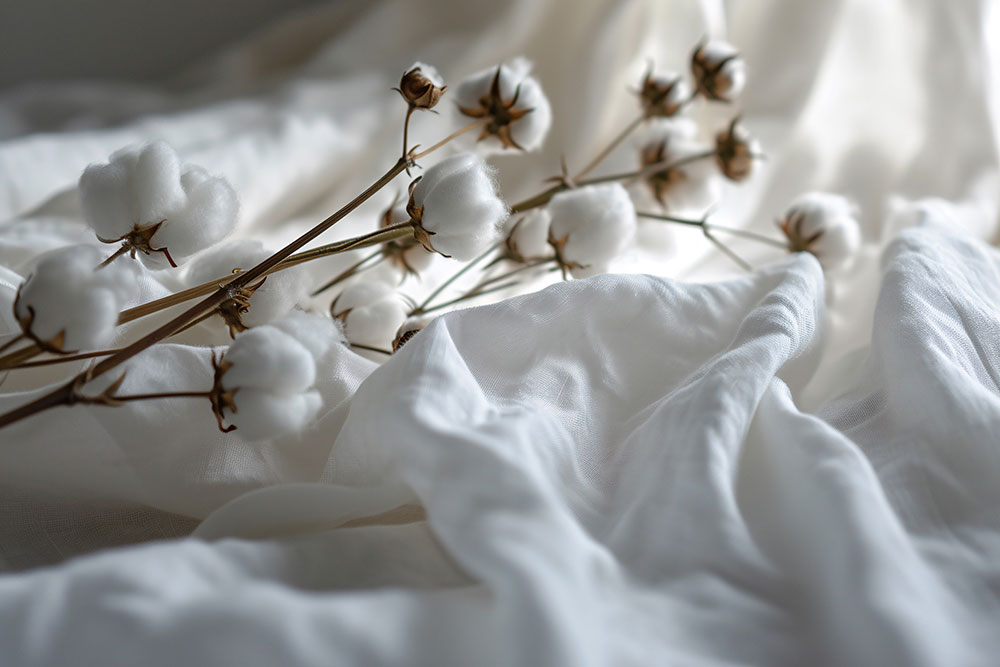
Mercerized cotton possesses easy care features. It is used in the combination of finishes. Thecleaning of this cotton is easy. It features the release of stains and odors. Home laundry is suitable to care for this fabric. Even after multiple washes, the fabric does not lose resistance. This cotton fabric is not required to be washed all the time. For instance, pillows, and runners.
Mercerized cotton fabric is lustrous. It has a shiny appearance. But, it is not soft and gentle. The reason is the caustic soda treatment that makes the fabric a bit stiff. The end product does not contain any chemical agents. So, using the fabric is safe for babies.
Mercerized cotton yarns with S-on-S ply consist of a small amount of elasticity.
For sewing and crocheting purposes, the fabric has been chosen widely. The fabric is pleasant to sew. The advantage is that there is a lack of pilling. For evening wear, there is the luster and drape of the sweater.
For summer knitting purposes, the fabric is well-appreciated because of the low-pilling feature. In the case of crocheting, the thread has a higher luster and better color penetration.
The subtle shine contributes to the sewing of exclusive cloths. They are elegant shirts, accessories, and other dresses.
Mercerized cotton is easy to dye. Unmercerized cotton can grasp the natural look of the cotton. Also, there is increased absorbency in unmercerized.
Both are affordable. In terms of shine and strength, Mercerized one will be ahead. Besides, mercerized ones have a nice balance of twists. Because of their not being tightly twisted, the fabric seems to contribute more to making towels and napkins.
Mercerization reduces the color fade rate in textiles. It provides other beneficial attributes. This is a treatment that improves the cotton’s ability to absorb and hold dye. For fashion retailers, Mercerized cotton served in several aspects. For example: this cotton is a superior type.
The superiority depends on the enhanced qualities, for example, strength, better dye absorption, shiny look, and soft feel. Even if fashion retailers sell items, items would be in a durable, and comfortable shape.
Mercerized cotton fabric is high-quality. It looks great. So, customer feedback serves a lot to boost business. These cotton products are highway in price. The business of mercerized cotton would price higher.
Cotton bedsheets are natural cellulose fiber. These fibers absorb dyes. They are prone to release the dye molecules. These molecules detach from the fibers. Then they get exposed to chemicals, which are detergents. The use of detergents in washing bedsheets may fade away the dye molecules.
Mercerizing makes the bed sheets better. It increases the diameter of cotton fiber. It also causes the fiber length to shrink. Also, other attributes of cotton were improved. There is an increase of tensile strength and weave of the fabric.
Mercerized cotton feels less airy compared to regular cotton. This cotton feels soft. There is the use of chemicals but chemical-used mercerized cotton tends to be more eco-friendly.
Meanwhile, regular cotton serves as the standard form of cotton. Cotton fibers which are regular lack enhanced qualities. The fibers are not strong because they are untreated. The dye absorption of regular cotton is uneven. It results in less vibrant colors. Regular cotton tends to be highly absorbent, a little bit dry, and affordable. However, the cost of mercerized cotton can get higher if fibers are treated with more processes and chemicals.
The market for mercerized cotton has been experiencing steady growth. In recent years, there has been a demand for high-quality, durable, and appealing products made of cotton.
All these features tend to the expansion of the market. The growing textile industry in the region of Asia-Pacific and Latin America fueled the demand for this fabric. Certain factors contributed to the market growth, for instance, the rapid urbanization, the increasing disposable income, and the changing of consumer preferences.
Mercerization improves the dye of the cotton fabric. The treatment also ensures the fabric gets tear strength and zero fabric shrinkage. Durability, softness, and moisture-absorbing denote the mercerized cotton. These features represent a great deal for a variety of applications. Considering this cotton fabric for the next project serves all your purposes.