2009년부터 이어온 니트 원단 제조사 · 중국
2009년부터 이어온 니트 원단 제조사 · 중국

Key Sourcing Takeaways
Mineral wash fabric is one of the few finishing categories where variation is the product, not a defect. But that doesn't mean anything goes in bulk. The real challenge for sourcing teams is understanding what kind of variation is intentional, what's within tolerance, and what signals a batch problem — before production runs start.
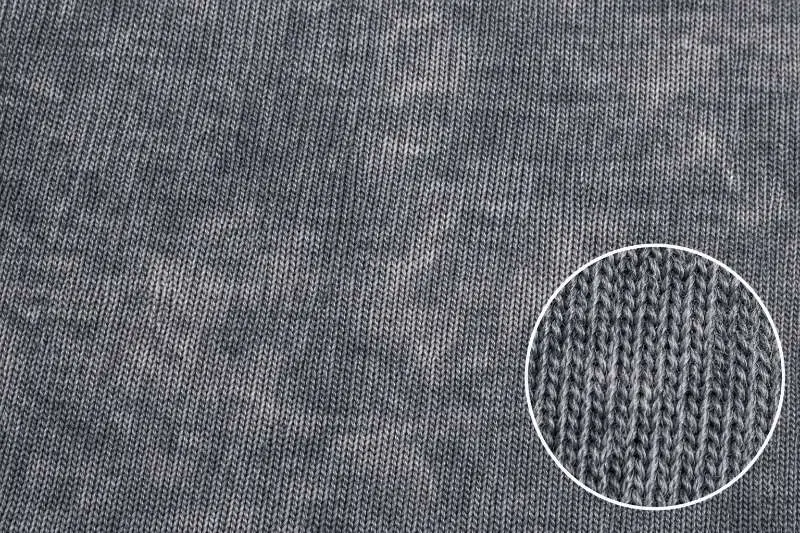
Mineral washing can combine controlled wash chemistry with mechanical surface abrasion to create an uneven, faded appearance on the dyed fabric surface. The exact process depends on the approved base fabric, wash intensity, and buyer’s target shade effect. On knit fabrics, the result is strongly affected by loop exposure, yarn structure, and how the surface responds after washing.
Because knit constructions are built from interlocking yarn loops rather than woven interlacings, the abrasion acts unevenly by design: exposed yarn segments pick up more wear and color change than the tucked portions underneath. This structural characteristic is why mineral wash behaves differently on a single jersey base versus a heavier interlock or terry construction — the loop geometry changes how deep the abrasion reaches and how color distributes.
The fiber content of the base fabric compounds this further. Cotton-dominant constructions tend to accept dye discharge more visibly, producing stronger tonal contrast. Blends behave differently depending on how each fiber reacts to both the initial dye and the subsequent wash chemistry. This is not an area where directional generalizations hold across all constructions — the actual effect depends on the specific base cloth confirmed at sampling.
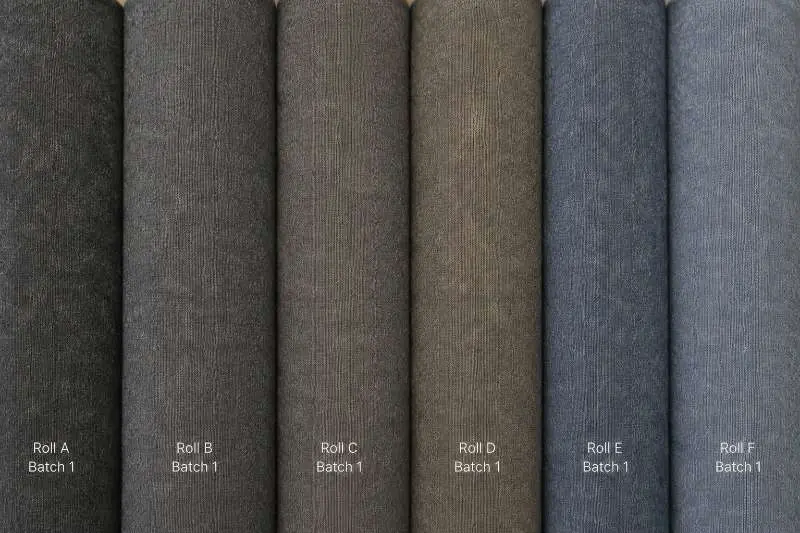
The central sourcing question for mineral wash fabric orders is not 'will every roll match?' — they will not, and they are not designed to. The real question is: what variation range has been agreed upon, and how is it verified before shipment?
In bulk production, mineral wash fabric is evaluated against a tolerance band rather than a fixed color standard. This band is established during the pre-production stage, typically through a lab dip approval process that, for mineral wash, works differently than conventional solid dyeing.
With a standard dyed fabric, the lab dip establishes a single target color, and bulk production is measured against it using spectrophotometric data. With mineral wash fabric, the lab dip instead defines the visual character of the variation itself — the depth of the fade, the contrast between light and dark areas, and the overall distribution of the wash effect. The approved lab dip sample becomes the visual standard for the range of acceptable variation, not a single color endpoint.
This distinction matters for buyers. If a sourcing team approaches a mineral wash order expecting the same pass/fail logic used for solid colors, they will either reject acceptable fabric or miss actual production problems. The approval criteria need to be established explicitly at sampling — ideally with signed-off reference swatches covering the outer edges of the acceptable range, not just the center point.
Common rejection criteria in mineral wash bulk production include: uneven abrasion that creates defined lines or patches rather than gradual tonal shifts; excessive color loss beyond the agreed fade depth; or mechanical damage to the yarn loops from over-processing. These are distinguishable from intentional variation and should be documented in the pre-production agreement.
Not all knit bases respond to mineral washing in the same way, and the construction of the base fabric is one of the most consequential variables buyers control before production begins. Selecting the right base — in terms of knit structure, weight, and fiber content — is what determines whether the wash result aligns with the intended end-use.
Lighter-weight, finer-knit constructions — such as single jersey — tend to produce a more even, surface-level wash effect. The relatively flat loop structure means the abrasion reaches the yarn more uniformly, and the resulting fade is typically more consistent in distribution across the roll. For applications where the washed look needs to read as cohesive garment-to-garment, this is often the preferred base category.
Heavier constructions introduce more structural variation into the wash process. Thicker loop structures create more shadow and differential exposure between the raised and recessed yarn portions, which can produce a more dramatic, high-contrast wash effect. Whether this is desirable depends entirely on the target end-use — it may be exactly right for certain casualwear applications or too visually aggressive for others.
GSM should be checked on the approved washed sample, not only on the greige or pre-wash fabric. Mineral washing can change perceived hand feel, surface softness, and dimensional behavior, so buyers should confirm the final GSM range, shrinkage allowance, and shade band together before bulk approval. This is especially important when the same wash effect is applied to different knit bases.
OEKO-TEX® Standard 100 certified options are available for buyers with chemical safety requirements. Buyers can review the OEKO-TEX® Standard 100 scope before confirming certification needs at the sampling stage.
Mineral wash orders carry more pre-production confirmation requirements than standard dyed fabric orders. The following checklist covers the points most likely to cause downstream problems if left undefined:
Buyers who invest time in the pre-production confirmation process for mineral wash orders consistently experience fewer rejection events and more predictable reorders. The variation inherent in the finish is not a supply chain risk — the risk comes from assuming it can be managed the same way as conventional fabric categories.
Batch-to-batch color consistency in mineral wash is managed rather than guaranteed. Within a defined tolerance range — established at the pre-production approval stage — reorders can be produced to match the visual character of the original. The key is having signed reference samples at the edges of the approved range, so each new batch is measured against a clear standard rather than a memory of the previous order.
The right base depends on the intended wash effect. Single jersey constructions tend to produce more even, surface-level fade distribution and are a common starting point for buyers new to mineral wash sourcing. Heavier or more textured knit bases produce higher contrast and more dramatic effects, but require closer pre-production alignment on what the acceptable output range looks like. Fiber content — particularly the cotton content and blend ratio — also significantly affects how the wash chemistry interacts with the base.
Runtang Tex manufactures mineral wash knit fabric for apparel brands. Request a sample to confirm base fabric, shade range, shrinkage allowance, and bulk tolerance before production.