Knit Fabric Manufacturer Since 2009 · China
Knit Fabric Manufacturer Since 2009 · China

When sourcing activewear fabrics, breathability claims are common — but without a measurable, reportable parameter, they are difficult to verify before bulk production. Fabric air permeability is the specific physical property that quantifies how freely air passes through a fabric under defined conditions. For apparel brands developing sportswear, training kits, or performance basics, knowing how to read and request air permeability data from a supplier is a practical step that reduces sampling revisions and limits post-production performance complaints.
This guide explains how air permeability is tested, how knit structure affects the result, and which verification steps are worth including in your pre-sampling checklist.
Air permeability measures how much air passes through a fabric per unit area per unit time under a fixed pressure differential. It is expressed in mm/s or L/m²/s (ISO system) or cfm/ft² (ASTM system). This is a distinct metric from water vapour transmission — the two together define what is loosely called "breathability", but they are tested separately and behave differently depending on fabric construction.
From a sourcing perspective, air permeability matters for two practical reasons:
Brands that treat air permeability as a measurable, reportable spec — rather than a qualitative description — are better positioned to manage bulk consistency and resolve quality disputes with supporting data.
Two test standards dominate the industry. Understanding what each measures helps buyers specify which report to request and how to read the numbers.
ISO 9237
ISO 9237:1995 is a commonly requested standard for fabric air permeability reports in international textile sourcing. It measures the permeability of fabrics to air under defined laboratory conditions. ASTM D737 is also widely used, especially when suppliers or buyers follow North American testing requirements. Because report units, conditions, and lab settings may differ, buyers should compare results only when the test method and sample condition are clearly stated.
ASTM D737
ASTM D737 is the North American equivalent. It operates on a similar principle — measuring airflow through a fabric under controlled pressure — but uses cfm/ft² (cubic feet per minute per square foot) as its unit and may apply a slightly different pressure differential depending on the fabric category. Results between ISO 9237 and ASTM D737 cannot be directly compared without conversion, so it is important to align on the standard before requesting a test report.
What to request from your supplier:
Note: Air permeability values may vary depending on yarn count, GSM, fabric construction, and finishing treatment. Reported values should be treated as reference data for a specific sample, not as absolute guarantees for bulk production.
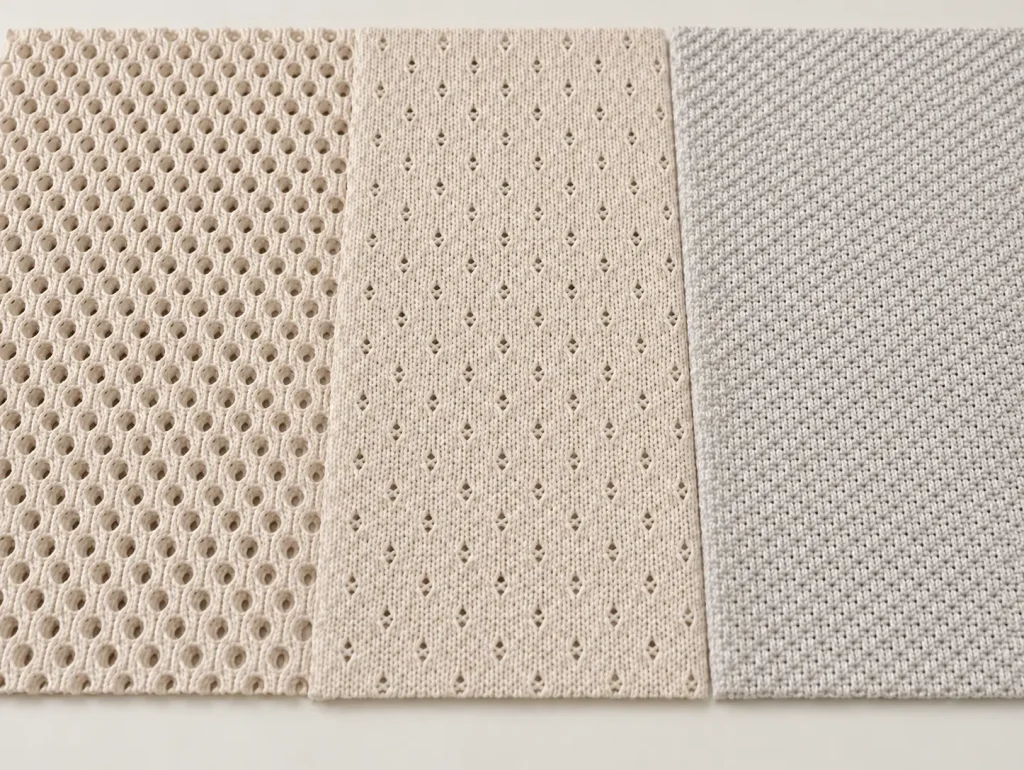
Knit structure is one of the primary determinants of air permeability. Open-hole constructions allow significantly higher airflow than compact solid-knit structures, though the relationship is also influenced by yarn type, GSM, and finishing. The three structures most relevant to sportswear sourcing — knitted mesh, bird's eye fabric, and pique knit fabric — differ meaningfully in their air permeability characteristics.
| Fabric Structure | Air Permeability Level | Structural Feature | Typical Application |
|---|---|---|---|
| Knitted Mesh | High | Intentional open holes formed in knitting; high porosity | High-intensity training panels, jersey shells, uniform inserts |
| Bird's Eye Knit | Moderate–High | Small regular openings in a stable knit base | Polo shirts, training tops, performance uniforms |
| Pique Knit | Moderate | Raised surface texture over a tighter knit base | Polo shirts, leisure sportswear, casual performance tops |
Knitted mesh achieves the highest air permeability by design — the open-hole structure allows unobstructed airflow and is well suited for garment panels that require maximum ventilation, such as the underarm sections of training tops or the body of football jerseys. Bird's eye fabric offers a balance between structure and ventilation; its small, regular openings provide meaningful airflow while maintaining enough surface integrity for uniform printing and panel assembly. Pique knit, with its characteristic raised texture, sits at the moderate end of this comparison — the raised loops create a slightly more open surface than a plain jersey, but the knit base remains relatively compact.
Beyond fabric type, several construction variables can shift air permeability readings — sometimes significantly. Understanding these variables helps buyers interpret supplier test reports and anticipate how a fabric may perform across a range of specifications.
GSM (grams per square metre)
Higher GSM typically corresponds to more material per unit area, which can reduce air permeability as pores become denser or yarn coverage increases. However, this relationship is not absolute — a heavyweight open-structure mesh may still outperform a lighter compact jersey. GSM should be considered alongside construction type, not in isolation.
Yarn count
Finer yarns tend to enable tighter knit construction, which may reduce air permeability. Coarser yarns, by contrast, often produce a more open structure that allows greater airflow. The specific effect depends on machine gauge, stitch density, and finishing — these variables interact, and no single factor determines the outcome predictably without sample testing.
Finishing treatments
Post-knitting treatments can materially change air permeability. Water-repellent (DWR) finishes, for example, tend to partially block fabric pores and can reduce measured air permeability even without altering the underlying knit structure. Anti-pilling treatments, peaching, and calendering may each affect the result to varying degrees. Buyers sourcing treated fabrics should request test reports conducted on the finished fabric, not the greige.
Spandex/elastane content and stretch state
When a knit fabric containing elastane is stretched, the pore structure may open and change the measured airflow. The effect depends on stretch direction, knit density, elastane ratio, and finishing. Most standard reports reflect the selected laboratory condition, so buyers should not treat an unstretched test result as a full prediction of in-wear breathability.
Fabric air permeability is a straightforward parameter to request at the sampling stage, but the value of the data depends on how the test was conducted and whether it reflects the production-intent specification. Before approving a sample for bulk, consider including the following checks in your evaluation:
If specific air permeability test data for Runtang's knitted mesh, bird's eye, or pique fabrics are required for your tech pack, please request samples and test reports directly.
ISO 9237:1995 is the main ISO standard used for fabric air permeability testing. It defines a method for measuring how air passes through permeable textile fabrics under laboratory conditions. ASTM D737 is another common method, especially in North American testing contexts. Buyers should confirm the exact method, sample condition, and reporting unit before comparing supplier reports.
Air permeability varies considerably by fabric type and construction. Air permeability values vary too widely to define one reliable “typical” number for sportswear knits. An open knitted mesh will usually test higher than compact pique or jersey, but the final result depends on hole size, GSM, yarn count, finishing, and whether the fabric is tested after dyeing or coating. For bulk sourcing, buyers should request ISO 9237 data for the exact sampled fabric instead of comparing general benchmark ranges.
Knit structure affects air permeability primarily through pore size, pore density, and yarn coverage. Open-hole constructions such as knitted mesh create intentional air channels that allow significantly higher airflow. Bird's eye and pique fabrics introduce smaller, more controlled openings within a more structured knit base, resulting in moderate air permeability. Compact single or double jersey structures with high yarn coverage tend to produce the lowest readings within the knit category. Finishing treatments, GSM, and yarn count further modify these baseline characteristics.
Runtang Textile Co., Ltd. supplies knitted mesh, bird's eye, and pique knit fabrics for sportswear and performance apparel brands across Europe, North America, and Australia. With over 300 brand clients and a production capacity of 20 million yards per year, we provide fabric samples with technical specifications to support your development process. Request a sample or get a quote →
 ટેકનિકલ જાણકારી-કેવી રીતે
Nap Direction in Pile Knit Fabric: Why Cutting Spec Decides Bulk Color Uniformity
READ MORE ફેબ્રિક
Terry Cloth: The Ultimate Guide to This Absorbent and Versatile Fabric
READ MORE ટેકનિકલ જાણકારી-કેવી રીતે
Knit Fabrics vs. Woven Fabrics
READ MORE ટેકનિકલ જાણકારી-કેવી રીતે
હેવીવેઇટ ફ્રેન્ચ ટેરી યુનિફોર્મ્સ સાથે તમારી શૈલી અને આરામને વધારો
READ MORE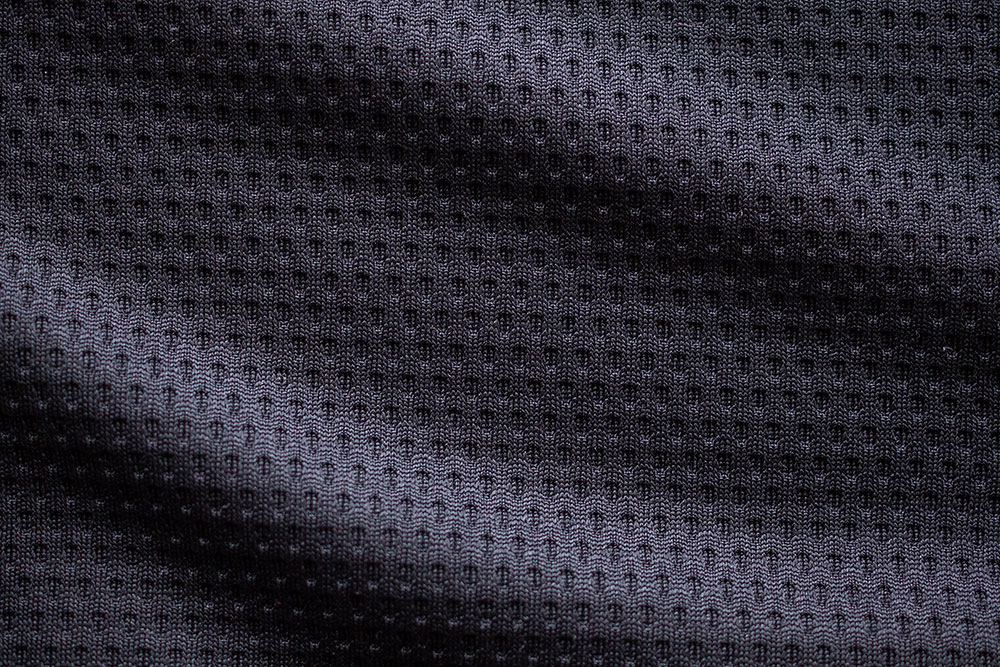 ફેબ્રિક
Sportswear Fabric: Redefined Sweat Management for Apparel
READ MORE