Knit Fabric Manufacturer Since 2009 · China
Knit Fabric Manufacturer Since 2009 · China

Most sourcing teams already know that polar fleece fabric is the default entry point for recycled polyester. But rPET-compatible knit structures go well beyond fleece — and the certification requirements, yarn compatibility, and bulk approval process differ by construction. This guide covers what fabric buyers need to verify before placing recycled polyester knit fabric orders across mesh, interlock, jersey and fleece structures.
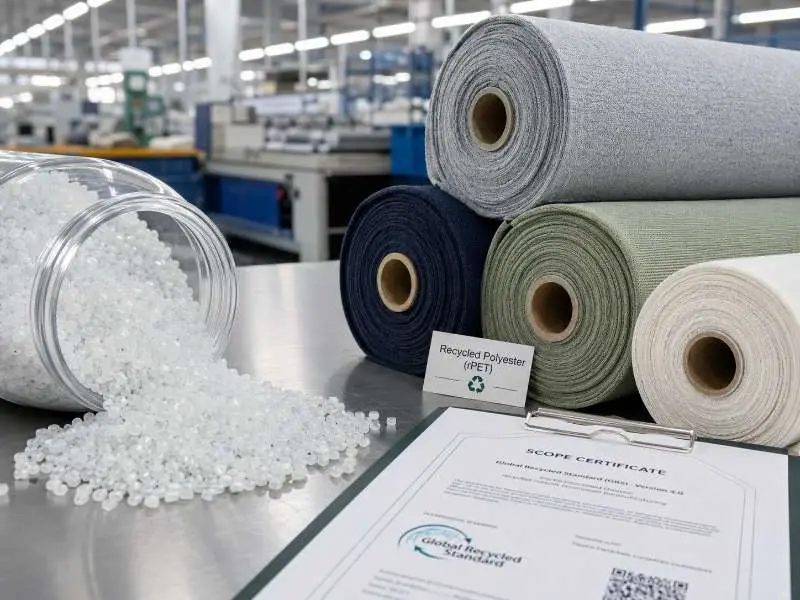
Recycled polyester — processed from post-consumer PET plastic bottles into spun or filament yarn — carries the same base performance profile as virgin polyester: comparable tensile strength, consistent dyeability, and stable wash durability. The difference lies in the supply chain documentation behind it, not the fiber performance on the loom.
Fleece has been the dominant rPET application in knit fabric because its staple-fiber construction is well-matched to the mechanical recycling process that produces rPET staple. But filament-based rPET — used in knitted mesh fabric, interlock, and jersey — has become more widely available as recycling processing capacity has grown. The sourcing implications are different for each structure, and buyers moving beyond fleece need to account for those differences before sampling.
One variable that does not change: any rPET knit fabric claiming Global Recycled Standard (GRS) certification must have a verified chain of custody from recycled raw material to finished fabric roll. That requirement applies regardless of whether the end construction is a brushed fleece or an open-mesh panel.
The Global Recycled Standard (GRS), administered by Textile Exchange, verifies recycled content and chain of custody while adding social, environmental and chemical processing requirements. For B2B sourcing, the standard can apply to products with at least 20% recycled content; product-specific consumer labeling generally requires 50% recycled content. Buyers should define the required claim type before sampling, then request the mill’s Scope Certificate, confirm whether knitting, dyeing and finishing are covered, and clarify Transaction Certificate timing for the actual shipment.
For buyers, the key check is not only the recycled-content percentage, but whether the claimed fabric construction, processing steps and shipment documentation are covered. Ask for the supplier’s active Scope Certificate before sampling, confirm whether knitting, dyeing and finishing are within scope, and clarify how the Transaction Certificate will be issued for the finished shipment. Certification bodies issue scope and transaction certificates to verify certified organizations, products, claims and labeling, so these documents should be checked before bulk approval, not only after production.
OEKO-TEX® Standard 100 certified options are available for buyers requiring substance safety verification alongside GRS. Please confirm certification requirements at the time of sampling.
rPET yarn can be processed into multiple knit constructions — each with its own fabric weight range, structural behavior, and supply chain considerations. The table below outlines the key sourcing variables by structure.
| Knit Structure | rPET Yarn Compatibility | Typical GSM Range | GRS Sourcing Note |
|---|---|---|---|
| Knitted Mesh | Filament rPET is often suitable | 80–180 GSM | Confirm yarn lot, knitting scope and dyeing/finishing coverage |
| Interlock | Filament or staple depending on hand feel | 180–280 GSM | If face and back yarns differ, both inputs need document coverage |
| Jersey | Filament or staple depending on GSM | 130–220 GSM | Single-face construction is simpler, but the yarn lot and finishing still need verification |
| Polar Fleece | Staple rPET is commonly used | 150–400 GSM | Brushing and anti-pilling finishing should be included in the covered processing |
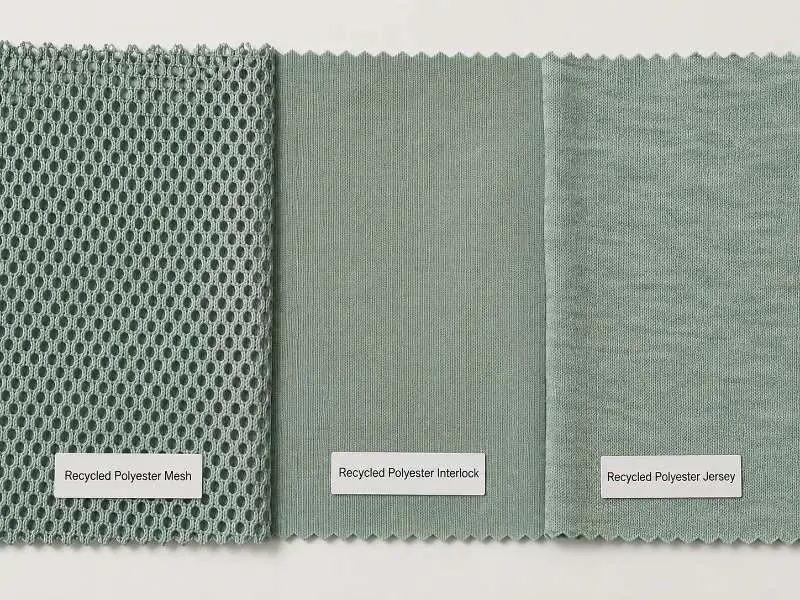
Knitted mesh fabric — produced with filament rPET — is well-suited to applications requiring open-structure breathability, such as panels in technical outerwear or performance tops. Filament yarn produces a cleaner loop geometry in mesh constructions, which matters for hole size consistency across bulk production runs. We manufacture knitted mesh fabric in recycled polyester options; sampling confirmation is required to verify GRS scope coverage for your specific construction.
Interlock structures can be produced with either filament or staple rPET depending on the target GSM and hand feel. The dual-face construction of interlock means both yarn inputs — face and back — need to be GRS-covered if the finished fabric is to carry a GRS claim. This is a common sourcing gap when buyers assume a single yarn TC covers the full fabric.
Jersey knit is often easier to document than multi-yarn constructions because its single-face structure can involve fewer yarn inputs. For brands comparing recycled polyester with nylon fabric options in the same activewear or performance range, yarn lot, dyeing scope and finishing coverage should still be verified before assuming the claim applies to the finished fabric.
GRS-certified sourcing introduces additional pre-production checkpoints that do not apply to standard virgin polyester orders. Buyers integrating rPET knit fabric into a compliance-driven sourcing workflow should plan for the following at the bulk approval stage:
For buyers comparing rPET options across fiber types, recycled knit fabric demand is covered in a separate overview of what is currently driving brand sourcing decisions in this segment.
rPET labeling indicates the fiber origin — polyester produced from recycled PET plastic. GRS certification is a third-party-verified standard that confirms the recycled content percentage, chain of custody from source material to finished fabric, and compliance with social and environmental processing requirements. A fabric can be labeled rPET without GRS certification; however, brands selling into markets with regulatory sustainability requirements — particularly the EU — may need GRS documentation to substantiate recycled content claims.
For the majority of standard knit constructions — jersey, interlock, and mesh — rPET can meet the same tensile strength, colorfastness, and wash durability specifications as virgin polyester, depending on the yarn grade and construction. Performance parity should be confirmed through lab testing on production samples rather than assumed from spec sheets. Some rPET yarns may have slightly tighter specification tolerances; this is typically managed at the yarn sourcing stage by GRS-certified mills.
MOQ requirements may vary depending on the specific construction and certification requirements. As a general reference, custom solid color orders start from 200 kg per color. Please confirm the MOQ and GRS scope coverage at the time of sampling request.
We manufacture recycled polyester knit fabric across mesh, interlock and jersey constructions. Request a sample to confirm construction specs, documentation scope and color availability before bulk.
 Manufacturer Insights
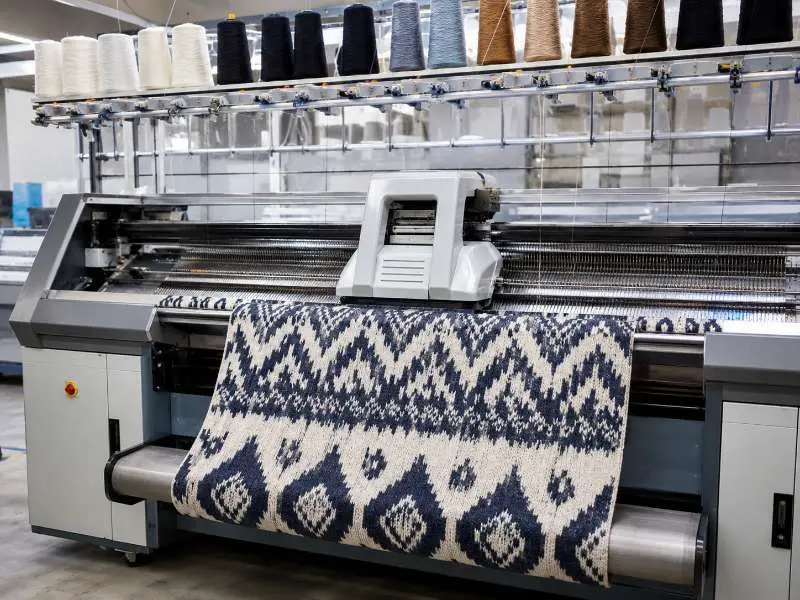
Jacquard Pattern Development for Knit Apparel: Repeat, Yarn Selection and Sampling Realities
READ MORE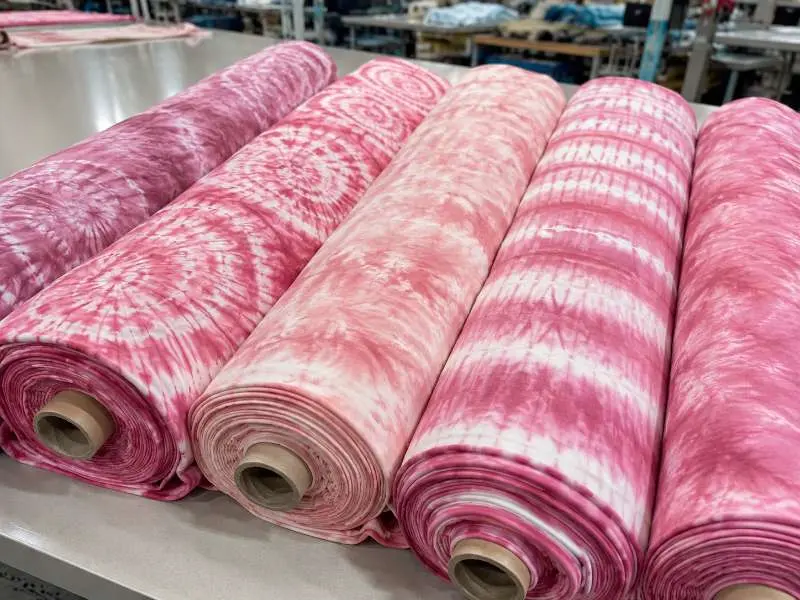 Manufacturer Insights
Tie-Dye Knit Fabric Bulk Production: Process Control and Batch Repeatability
READ MORE Fabric Guide
Fleece Fabric for Hoodies: GSM, Brushing, and Pilling Risk
READ MORE ቴክኒካዊ እውቀት-እንዴት
በከባድ ክብደት የፈረንሳይ ቴሪ ዩኒፎርሞች የእርስዎን ዘይቤ እና ማጽናኛ ያሳድጉ
READ MORE ያልተመደበ
Circular Knitting Machines: Tube-Shaped Fabrics with Precision
READ MORE